
By Trip 8, we had settled into the rhythm of working on the bank and the season was almost at an end. This one particular late August morning, we had spent time with the Atlantic spotted dolphins, collecting behavioral data and observations as we followed the group through the water.
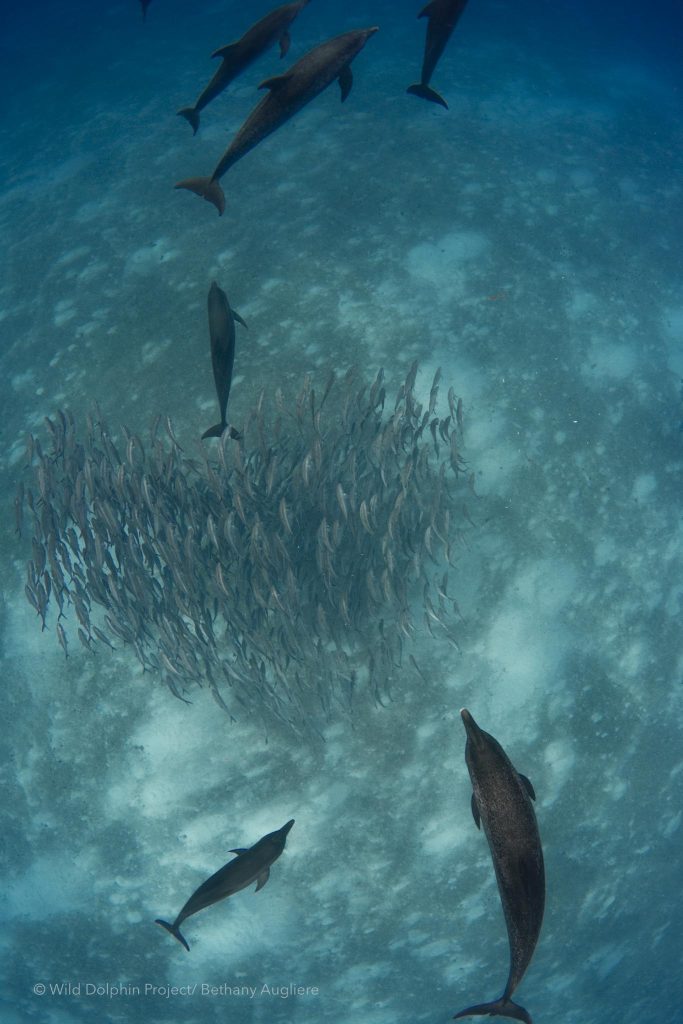
Later, we came across a large, active group. There was a lot happening: dolphins were interacting aggressively, including males chasing and fighting, while the group was also working around a bait ball of fish. The entire time we were in the water, we were following the dolphins as they swam against the current, which meant we were too — and it was not easy! The dolphins, of course, made it look effortless.
Then we noticed something different.
A Different Kind of Bottlenose
A group of bottlenose dolphins came into the area and crossed in front of the bow of the R/V Stenella. Almost immediately, we could tell they weren’t the bottlenose dolphins we typically encounter on the bank. They were larger and with a noticeably lighter color of white on their backs. These were offshore ecotype bottlenose dolphins.
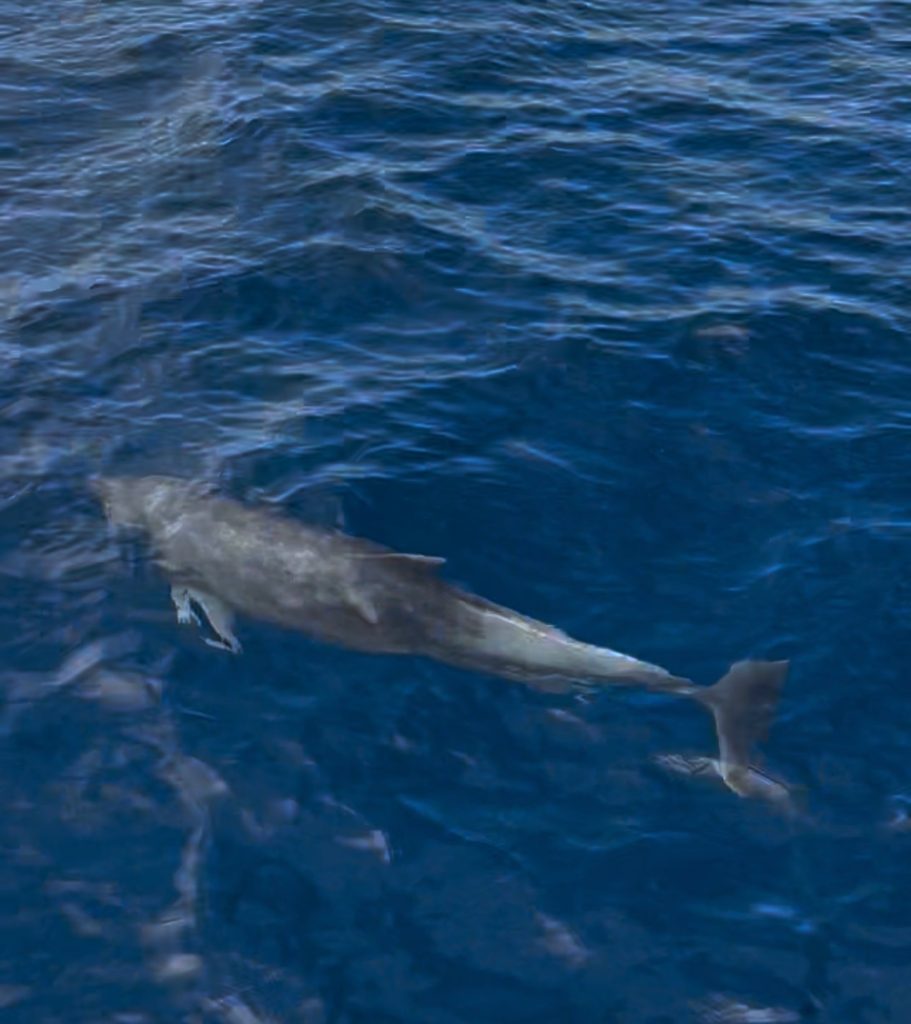
Offshore bottlenose riding the bow of Stenella, with the characteristic white back on the peduncle area.
Unlike the coastal or inshore bottlenose dolphins we encounter around the study site, offshore bottlenose dolphins spend much of their lives in deeper water and are larger-bodied animals adapted to that environment. And the spotted dolphins weren’t particularly interested in sharing their space. They chased the bottlenose dolphins away from the group. Because we were close to the edge of the sandbank, we suspect the bottlenose dolphins may have been drawn into the area by the concentration of fish and the bait ball.
Curious Dolphins at the Edge of the Bank
We eventually found the bottlenose dolphins again in deeper water. This time, they were around the bow of the research vessel, milling around and seemingly curious about us. And these dolphins were chatty. We could hear their whistles from the bow of the Stenella as they moved around the boat. Because our research is conducted under permit, we were able to deploy a hydrophone and recording equipment to listen to their communication. Then, we drove the boat and they rode the bow for awhile, leaping and jumping, and enjoying the free ride!
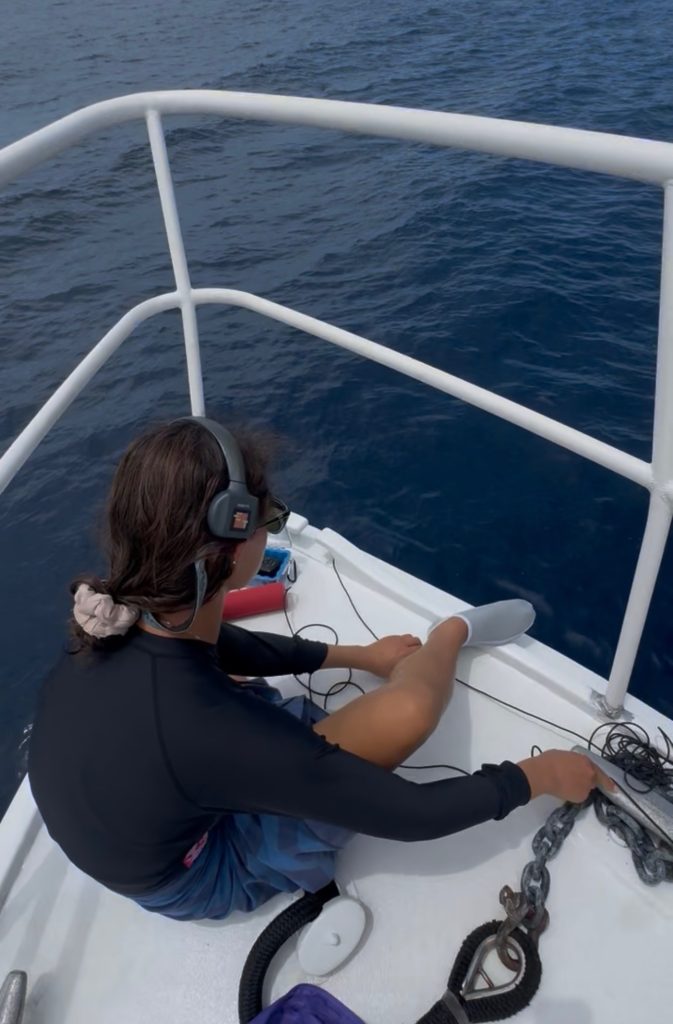
Researcher deployed a hydrophone with a recording device to capture the offshore bottlenose whistles and communication.
We watched them from the surface for a while, collecting identification photographs and observing their behavior. Since these weren’t dolphins we regularly encounter at our study site, we didn’t know how familiar they were with boats or people in the water. So when we decided to send a small research team into the water, we approached carefully.
Letting the Dolphins Come to Us
We slipped into the water from the back platform and moved slowly and kept our distance, allowing the dolphins to decide how close they wanted to get. They noticed us. Several turned toward the researchers to check us out, swimming over to investigate before moving away again.
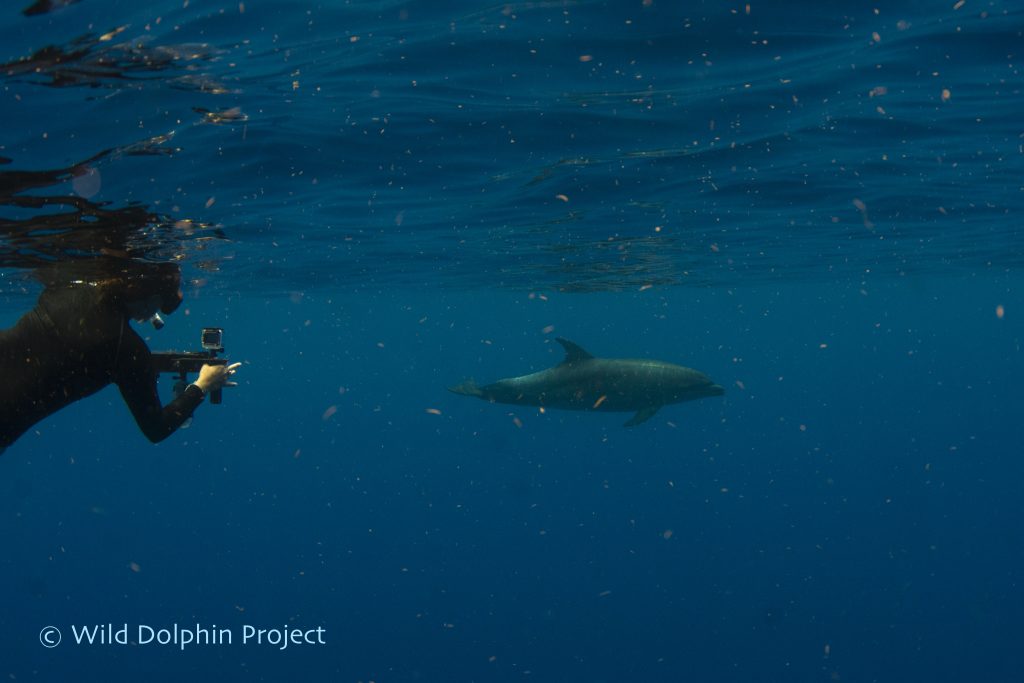
We never tried to approach or pursue them. When the dolphins eventually moved on, we let them go. For a research team that spends so much time studying familiar dolphins, encountering a group of offshore bottlenose dolphins in deeper water was a pretty special experience. It was one of those days in the field when you never quite know what you’re going to find. And that’s part of what makes studying wild dolphins so exciting.
Curious to learn more about the difference between bottlenose dolphin ecotypes, check out our blog from the archives here.