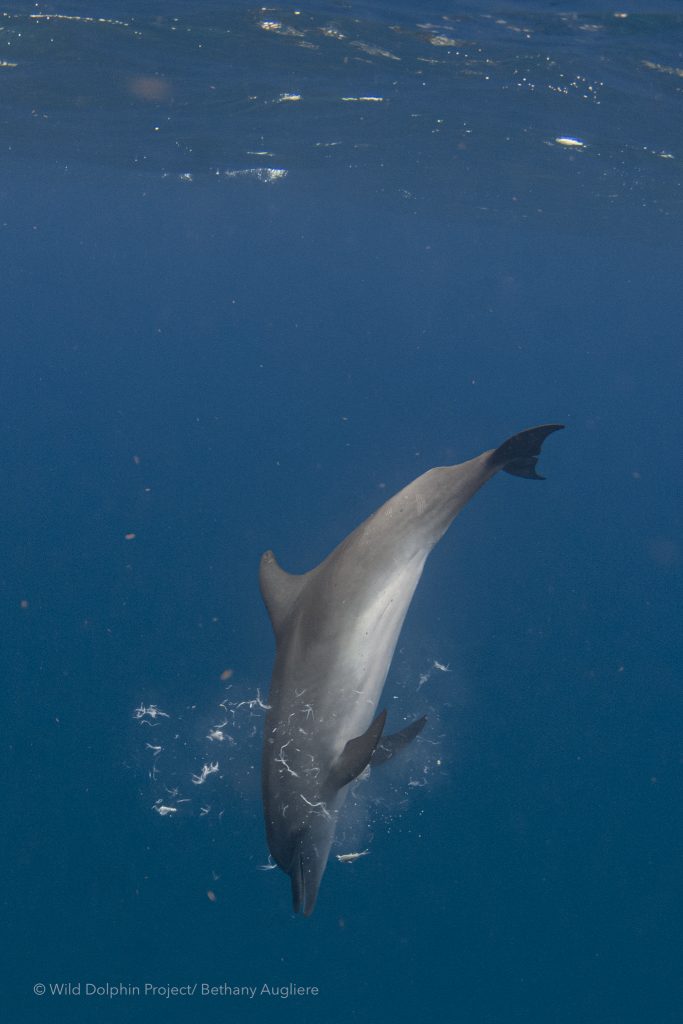
Swimming with wild dolphins is an incredible way to study them. As researchers, we can observe their behavior up close, record their sounds, and document interactions that would be difficult to see from a boat. There is so much happening below the surface that we can capture!
And sometimes, the dolphins leave us another kind of research opportunity.
A Little Cloud With a Lot of Information
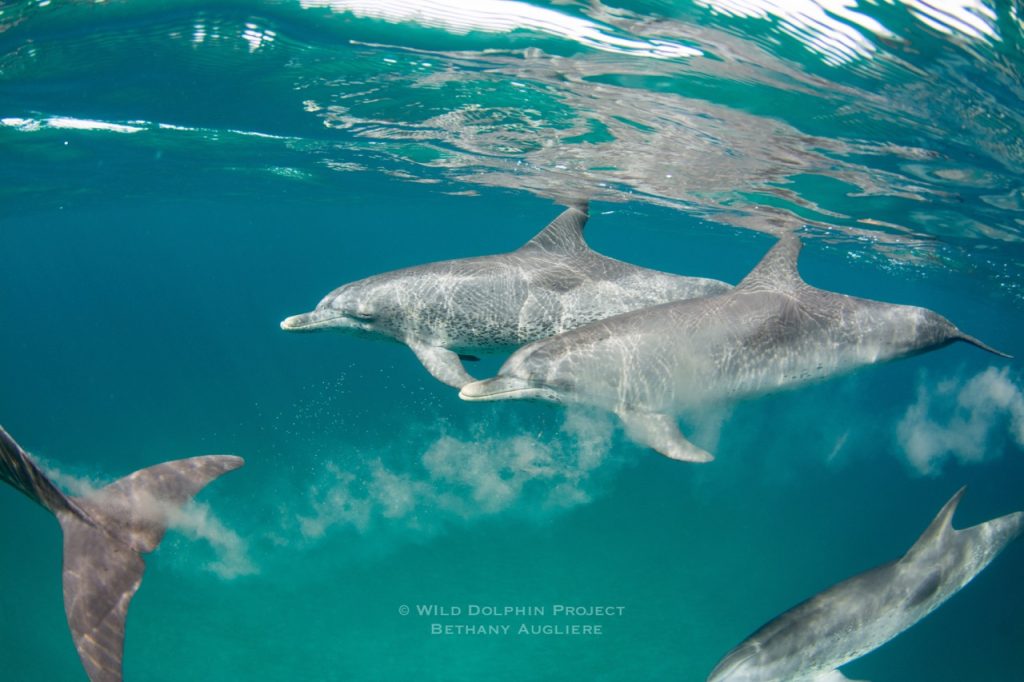
When a dolphin poops at the surface, the fecal material comes out in a cloud and floats in the water. Researchers can carefully scoop a sample into a small cup. It may not be glamorous, but these samples can contain valuable biological information about the dolphin.
At the Wild Dolphin Project, researchers wear weight belts while working in the water. Attached to those belts are small cups that can be used to collect fecal samples when the opportunity arises. The goal is to collect the samples without capturing, touching, or otherwise disturbing the dolphins.
At the end of a research day, the samples are treated with a preservative and frozen. At the end of the research trip, they are transported back to land and stored in a deep freezer at Florida Atlantic University. There, they can wait until geneticists and other researchers are ready to analyze them, whether that’s a graduate student or research associate.
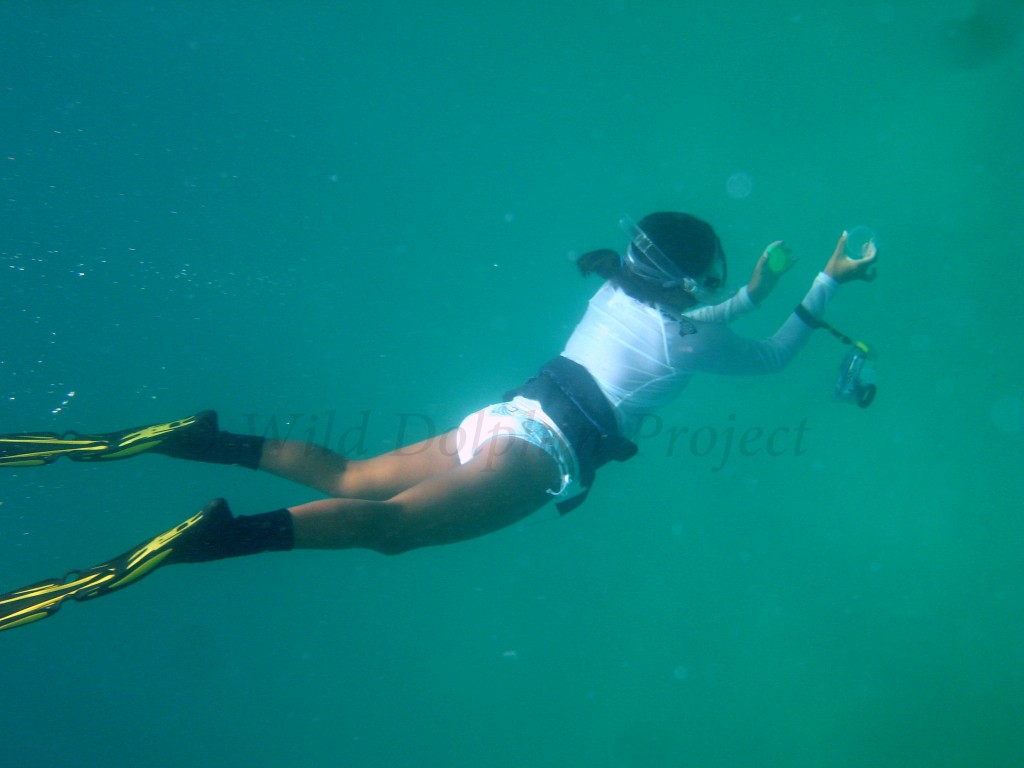
A WDP researcher dives down with a cup to collect a fecal sample. After collecting the sample it gets refrigerated and stored onboard.
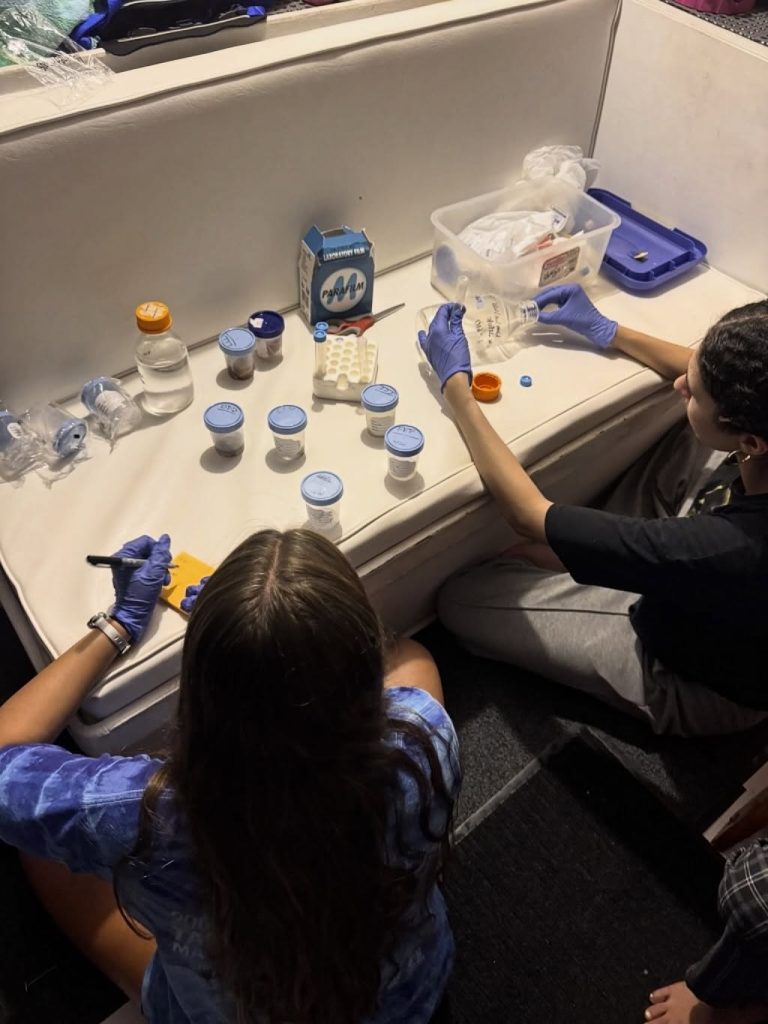
Researchers process fecal samples collected at the end of the day.
Who’s Related to Whom?
So, what can dolphin poop tell us? One important possibility is genetics. DNA in the samples can help researchers understand which dolphins are related to one another. That can include investigating parentage and, potentially, determining which male fathered a calf.
This isn’t a new question for the Wild Dolphin Project. Years ago, researcher Dr. Michelle Green, then a doctoral student at FAU with WDP founder and research director, Dr. Denise Herzing, used genetic information to investigate paternity in our dolphins. That research found that some older males in the population fathered many more offspring than others, giving researchers a better understanding of how reproduction works within this wild dolphin community. (Read the study here). For example,the father of Picasso, Paint’s only male offspring, is BigGash who was estimated to be around 50 years old when last seen. Denise first observed BigGash as a fully mature male in 1986.
Fecal samples may also provide information beyond genetics. Researchers are interested in what these samples might eventually reveal about hormones, reproduction, and health. The possibilities are especially exciting because they can provide information about individual dolphins without having to capture or handle them.
But, researchers studying whales and dolphins have several ways to collect biological samples. One common method is a remote skin biopsy, where a small dart collects a tiny piece of skin and blubber from a free-swimming animal. These samples can provide DNA for studying genetics, relatedness, and population structure. (Read more here).
And Sometimes, We Get a Peek at What They’ve Been Eating
Dolphins will sometimes regurgitate the hard-to-digest parts of their meals, including fish bones, squid beaks, and occasionally even worms or whole fish. Researchers can collect these remains, too, giving us another way to learn about what wild dolphins are eating and which prey species are part of their diet.
It may not be the glamorous side of dolphin research, but there’s a surprising amount of information hiding in what dolphins leave behind, from poop to vomit. Fecal samples can help researchers study genetics and potentially hormones and health, while regurgitated food gives us clues about what dolphins are eating. Sometimes, the least glamorous samples can tell us the most.