
Trip 4: The Calm Between the Clicks
Every trip out on the water brings something different, and trip 4 was no exception. While we were fortunate to have beautiful weather, bringing about lots of opportunities for encounters, we quickly noticed a pattern in the Atlantic spotted dolphins’ behavior. Being among the loudest animals on earth, you could imagine that encounters with wild spotted dolphins can get noisy, and that is the case for most of what we observe in the field. Atlantic spotted dolphins use whistles, clicks, and burst pulses for communication, navigating, finding prey, or avoiding obstacles. Despite this, many of our encounters during trip 4 seemed noticeably quiet. While we initially thought the spotted dolphins were being less vocal in water, a quick look at our hydrophone recordings revealed there was actually a whole conversation happening at a higher frequency than our human ears could hear. Having the proper equipment in the field that can capture these vocalizations is essential to understanding their communication. Even on a “quieter” day, there is always something to learn when you are in the water with these incredible animals.
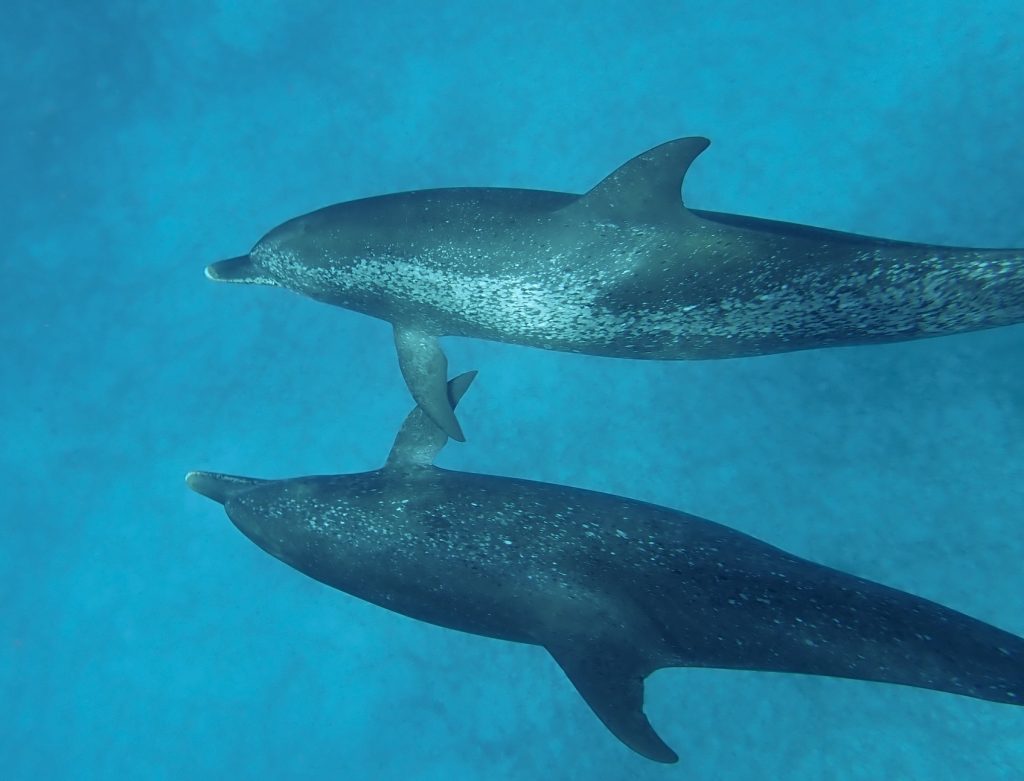
Meridian and Lava pec rubbing during an encounter.
Our first encounter occurred not long after our arrival at Great Bahama Bank (GBB). It was an exciting mixed-species encounter with both Atlantic spotted dolphins and bottlenose dolphins. Throughout the encounter, we observed aggression and dominance displays between the two species. Generally, it takes about six Atlantic spotted dolphins to chase away one bottlenose dolphin, and this encounter involved over 25 Atlantic spotted dolphins and six bottlenose dolphins. Synchronized swimming and vocalizations were observed as well as biting, chasing, tail slaps, and s-posture.
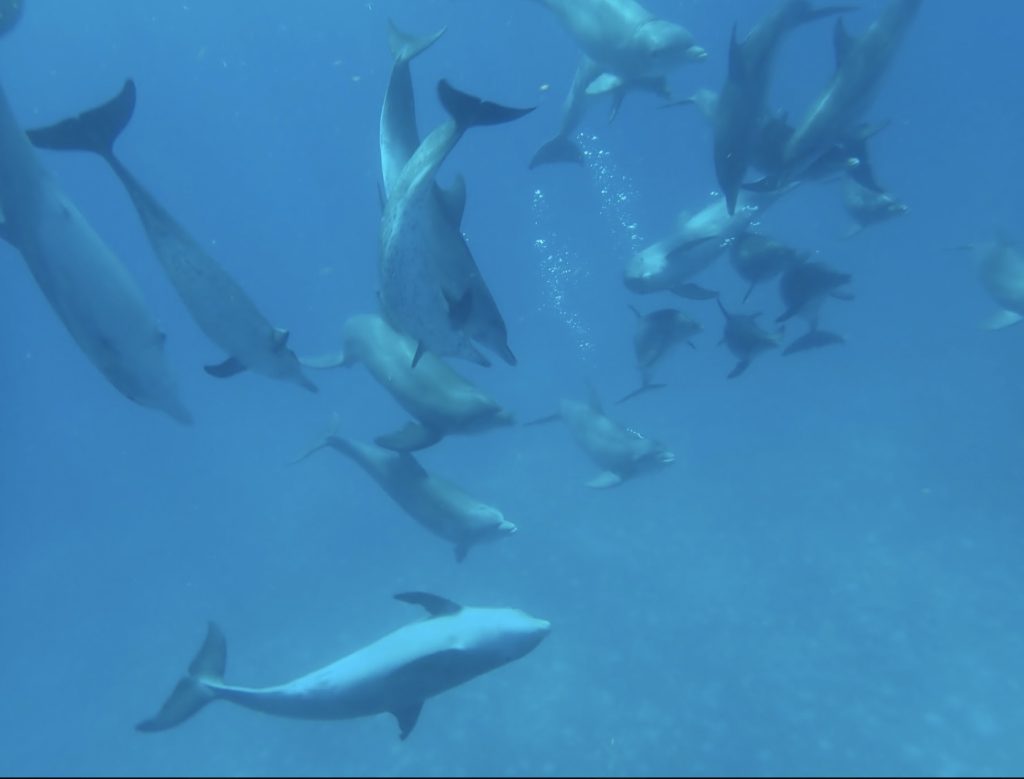
Atlantic spotted dolphins and bottlenose dolphins during a mixed species encounter.
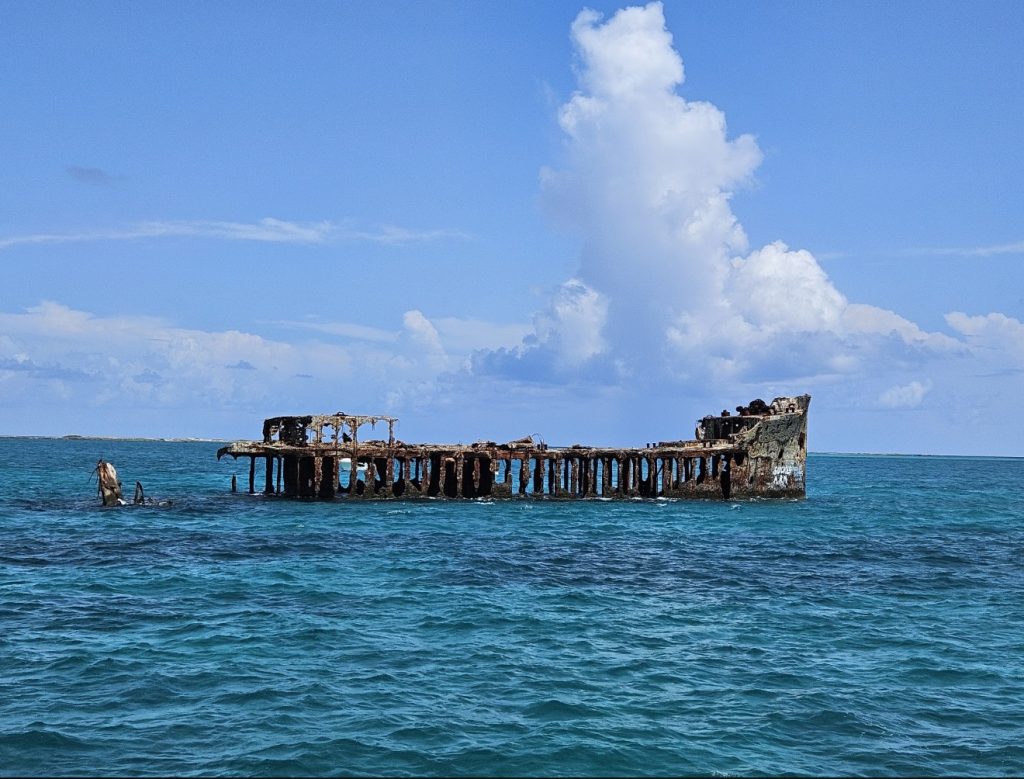
Between encounters, we anchored at a few beautiful locations to snorkel and explore. A stop at the shipwreck Sapona gave us the chance to experience the marine environment from a different perspective, with coral and reef life thriving around the structure. These moments provided a break while allowing us to appreciate even more of the incredible ecosystems that make the Bahamas such a special place.
On our final full day of the trip, we made a stop in Bimini for a short walking tour of the island. One of the highlights was visiting the Dolphin House, a beautifully unique spot built by local author and historian Sir Ashley Saunders using materials collected from around the island and the ocean. It was a fascinating look into the island’s culture and its connection to the sea.
That evening, we made our final anchorage at Great Isaac Cay. After another rewarding day, we had the opportunity to explore the island and enjoy one last evening together before heading home. It was the perfect way to wrap up an unforgettable trip.
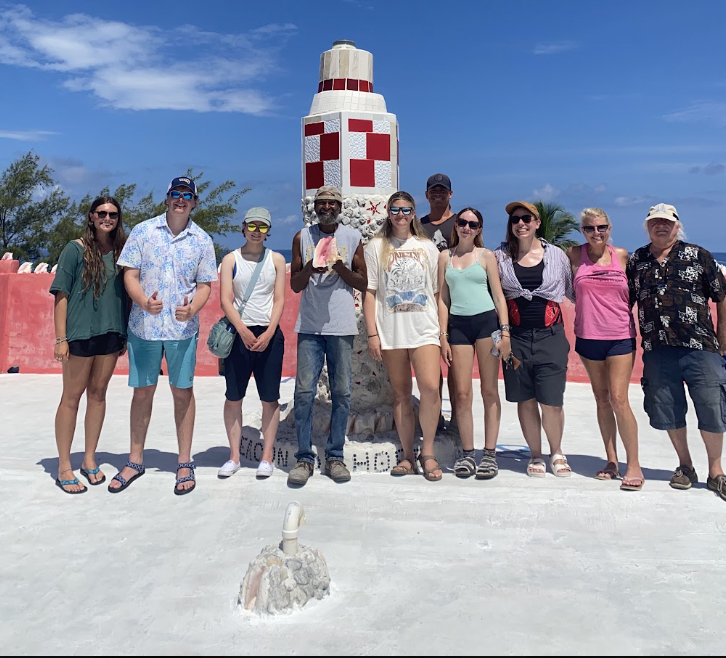
Passengers and crew with Sir Ashley Saunders at Dolphin House.
Trip 4 proved that every trip and every field season has its own story to tell. Whether observing mixed-species interactions, watching bottlenose dolphins crater feed, or spending time with curious spotted dolphins, each encounter added another piece to our understanding of these remarkable animals. Even in the calm between the clicks, there is always something to discover.