
Trip 2: Close Encounters of the Dolphin Kind
After an eventful first trip of our 42nd season, we were all eager to get back to the Bahamas to continue our field work. Unfortunately, Mother Nature had other plans. Due to rough seas, we could not cross over on our usual day and had to wait for calmer weather. We still made fun memories on Stenella as we welcomed four interns on board. To prepare them for the adventures ahead, we reviewed informative presentations and had an afternoon excursion to a local snorkel spot.
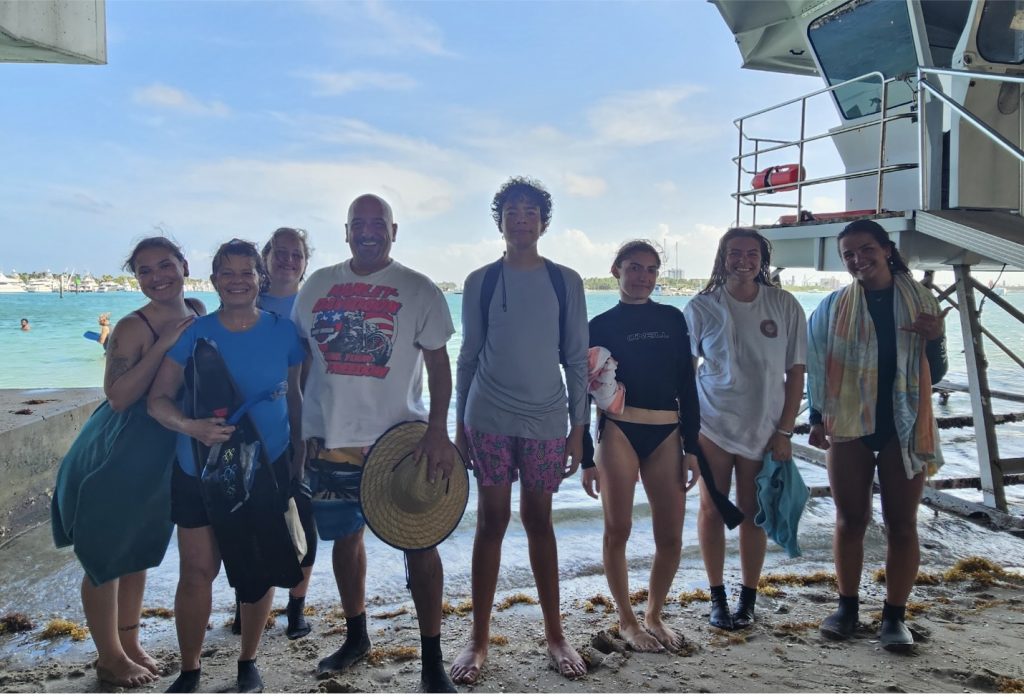
Caption: Crew and passengers after an afternoon snorkel at Blue Heron Bridge, Florida. Photo by Alexandra Rose.
After two days at the marina, the winds calmed and we set course for Bimini. The next day, we had our first Atlantic spotted dolphin encounter of the trip with Aquarius, her older calf Aquila, and another female juvenile named Podrick. During our encounter, we observed a lot of “pec rubbing” between Aquarius and Aquila. Dolphins will often rub their pectoral fins together to reinforce social bonding and it is common to see this between mothers and calves. Another exciting observation was that Aquarius is pregnant, and Podrick appears to be as well. We will monitor their progression throughout the season, and may be welcoming new calves from them in next year’s field season.
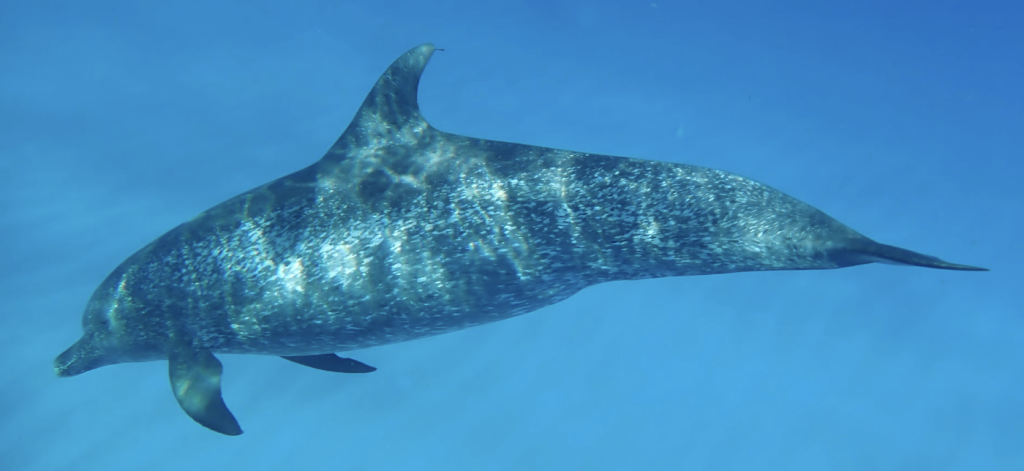
Aquarius seen with abdominal rounding and swelling around the genital area. Photo by Alexandra Rose.
Not long after, we had another encounter with a group of young speckled spotted dolphins. Two of the individuals observed, Banshee and Bindi, are actually uncle and niece despite being the same age. Banshee’s mother Bishu was first seen as a calf in 1993 on Little Bahama Bank. After she matured, she had her first calf Bijyo in 2007. The pair were a part of the migration to Bimini in 2013 and have been sighted there ever since. In 2023, we observed both Bishu and Bijyo with new calves Banshee and Bindi, respectively. Given their familial ties, it is no surprise that we sighted them together. During our encounter, we observed Bindi swimming close to Banshee’s flank in an echelon position. This swimming position is typically seen between mother and calf where the calf tucks in closely to swim in the mother’s slipstream. We were excited to document this behavior and hope to see them again with their mothers later this season.
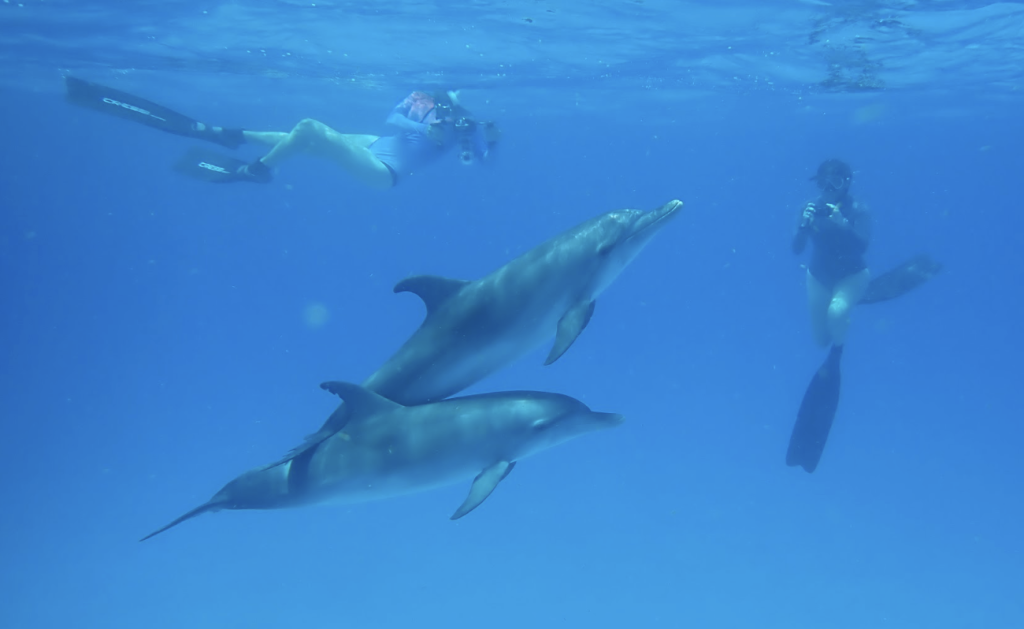
Caption: Research Assistant Alexandra and Field Assistant Allison record behavioral data during an underwater encounter with Bindi and Banshee. Photo by Jada Deane.
Our interns were hard at work this trip learning how to take underwater photos, identify individual dolphins, and recognize behavior. As part of their internship, they each prepared a presentation on a marine mammal species and gave their talk on the boat. Each intern had the opportunity to take underwater stills of dolphins which could be used for photo identification. Interns also gave a helping hand in the galley and collecting trash found floating in the water. Everyone got their feet wet – both physically and metaphorically – in what it is like to conduct field marine mammal research. For more information on our internship program, click here to learn more.
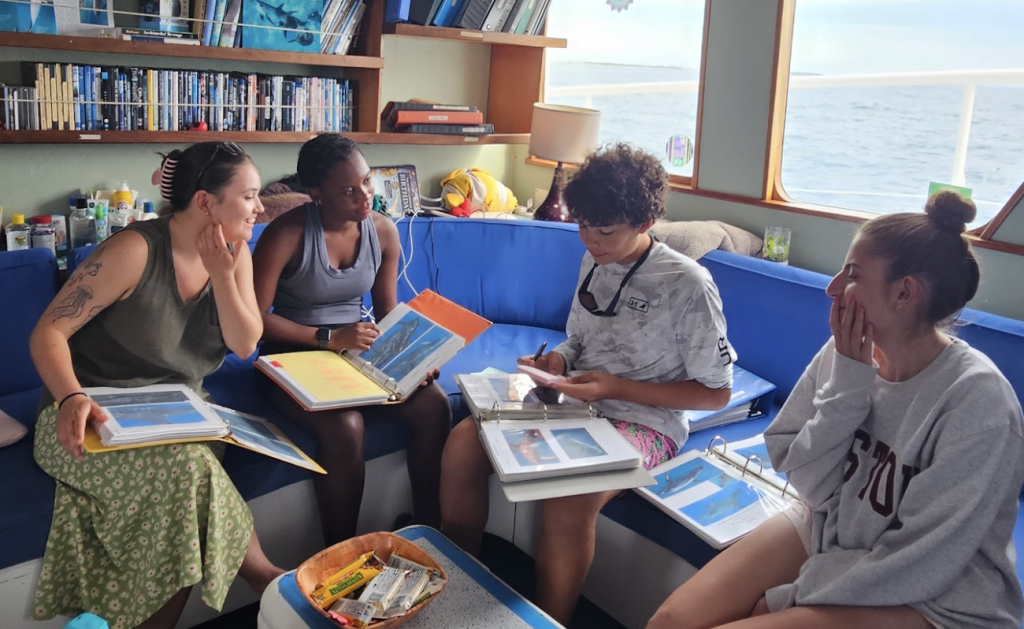
Interns work on Atlantic spotted dolphin photo ID practice exercises. Photo by Alexandra Rose.
On our final day in Bimini, we encountered four male mottled dolphins named Evren, Trident, Zeke, and Lettice. These four individuals are often seen together as they share an alliance, which is a lifelong bond between male spotted dolphins. They were seen pec rubbing, copulating, and swimming very closely together. Evren was more curious about our cameras and made multiple close swim-bys to inspect. It was a special final encounter that all of our passengers were able to experience and the clear waters allowed us to capture great data. With plenty more trips planned this field season, we are crossing our fins for more incredible encounters and calmer seas.
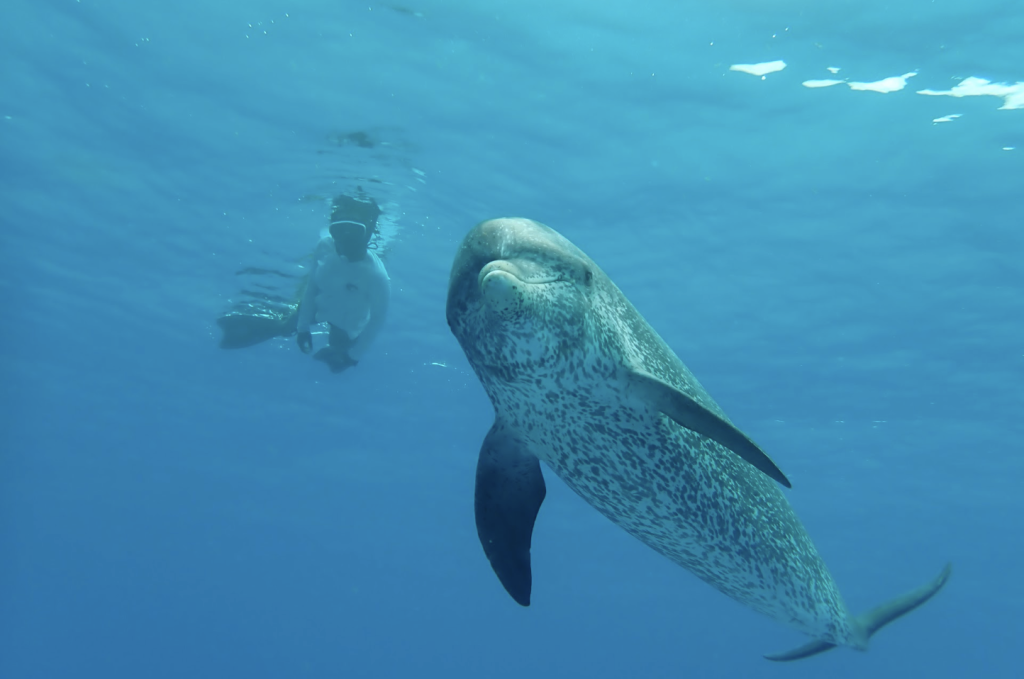
Stubby Memorial Scholar Jada with Evren during an underwater encounter. Photo by Allison Sanchez.