When you think about marine mammal research, you might picture scientists out on boats, watching dolphins underwater, collecting data, or tracking whales. But research doesn’t stop when scientists leave the field, and sharing what we’ve learned is another important part of the job.
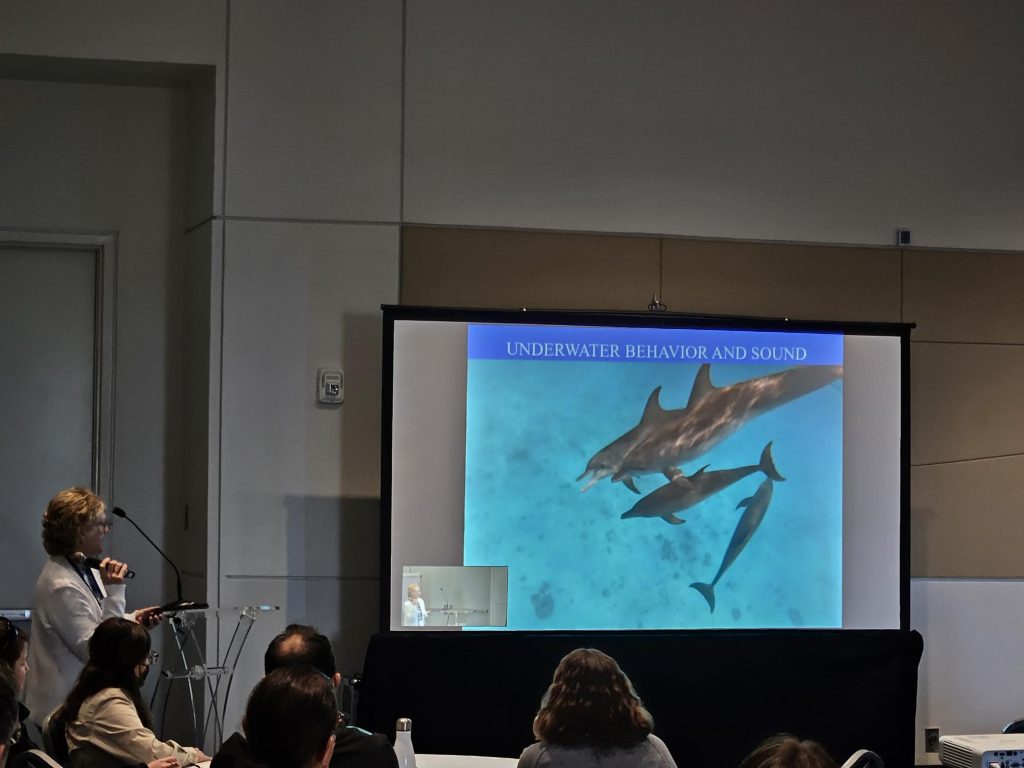
Every two years, the Society for Marine Mammalogy (SMM) holds its Biennial Conference on the Biology of Marine Mammals. The conference brings together scientists, students, conservationists, educators, and other marine mammal professionals from around the world. This is just one important conference for marine mammalogists specifically, but there are many others. Our research team, including Dr. Denise Herzing, founder and research director of the Wild Dolphin Project, and research assistant Alexandra Rose, attended the recent 2026 SMM conference in Puerto Rico.
So, what actually happens at a scientific conference, and why are these gatherings important?
A place to share research
Scientists often spend years studying marine mammals. They might be looking at dolphin behavior, whale communication, migration patterns, population health, or how human activities affect different species. At a conference, researchers have a chance to share what they’ve found with others working in the same field.
One way they do this is through presentations. Scientists give short talks about their research, explaining what they studied, how they collected their data, and what they learned. There are presentations on all kinds of topics, from animal behavior and communication to genetics, climate change, and conservation.
Another big part of the conference is poster sessions. Researchers create large posters showing their projects, including photos, graphs, and their findings. They stand beside their posters, talk with other attendees, and answer questions.
Poster sessions are also a great opportunity for students and early-career scientists to present their work. For some, it’s their first chance to share their research with a large group of people in their field. They can get feedback, meet other researchers, and make connections that may help them as they continue their careers. Many of Dr. Herzing’s graduate students have presented their thesis work at conferences!
Why sharing research matters
Scientists don’t work in isolation. Sharing research helps them see how their work connects with what others are finding.
For example, a researcher studying dolphins in Florida might notice a change in feeding behavior. Another researcher working with dolphins in the Caribbean might have noticed something similar. By sharing their observations, they can compare notes and start asking new questions. Is this happening in other populations? Could something in the environment be affecting their behavior?
These conversations can lead to new research questions, different ways of looking at a problem, or even future projects between researchers. It’s also a chance to hear what others think about your work. Someone might have a suggestion for collecting data, a different explanation for a finding, or experience with a similar situation. That kind of feedback helps scientists improve their research.
More than talks and posters
There is plenty happening outside the presentation rooms, too. Conferences include workshops, panel discussions, student events, and opportunities to meet other people working in marine mammal science.
Workshops might focus on new research tools, technology, or methods for collecting and analyzing data. Students and early-career scientists can meet more experienced researchers, find mentors, and learn about opportunities in the field. Dr. Herzing presented alongside colleague Charles Ramey of Georgia Tech and Google DeepMind during the workshop “Evolving AI Applications in Modern Marine Mammal Science” and also presented a regular talk, titled “Decoding Dolphins using AI: Uhura – Unsupervised Harvesting and Utilization of Recognizable Acoustics.”
Bringing it all together
The more we learn about marine mammals, the better equipped we are to understand the challenges they face. Research on where animals travel, what they eat, how they communicate, and how their populations are changing can help inform conservation and management decisions.
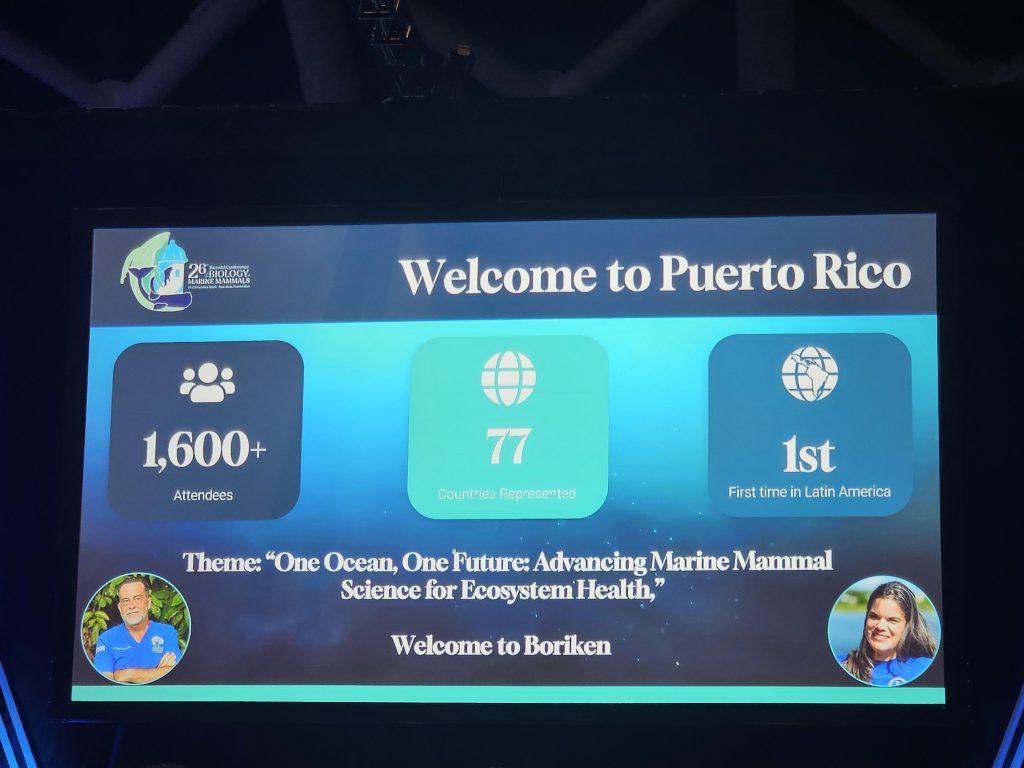
The Society for Marine Mammalogy’s 2026 conference brought this community together in San Juan, Puerto Rico, under the theme “One Ocean, One Future: Advancing Marine Mammal Science for Ecosystem Health” to highlight out shared responsibility to advance marine mammal science in the face of growing human pressure. It was the Society’s first biennial conference held in Latin America.
For the researchers attending, it was a chance to share years of work, learn from others — even in other fields — and make connections that could lead to new discoveries. And that’s really what a scientific conference is all about: bringing people together to share what they know and learn from one another.
“The level of talks, especially student talks, was excellent. So it seems that the field of Marine Mammalogy will have some great work happening in the future!!,” says Dr. Herzing.