
Every trip aboard the Stenella brings something new and exciting. This trip was filled with curious dolphin encounters, valuable intern training, and experiences that reminded us just how lucky we are to see a glimpse into the lives of the Atlantic spotted dolphins that the Wild Dolphin Project has been studying for over 40 years.
Courtship and Coalitions
One of the most memorable encounters occurred when we found a large group of male Atlantic spotted dolphins displaying courtship behavior toward a juvenile female named Ninja. After a brief in-water encounter, we returned to the boat and continued watching from the deck. From above, we had an incredible view of the male dolphins surfacing closely together and chuffing near the boat. The males had formed a super coalition, or a temporary union of multiple alliances, that can be observed when males are working together to court a female. Although we were not in the water to see the behavior up close, observing from the vessel gave us a unique perspective on their complex social behavior.
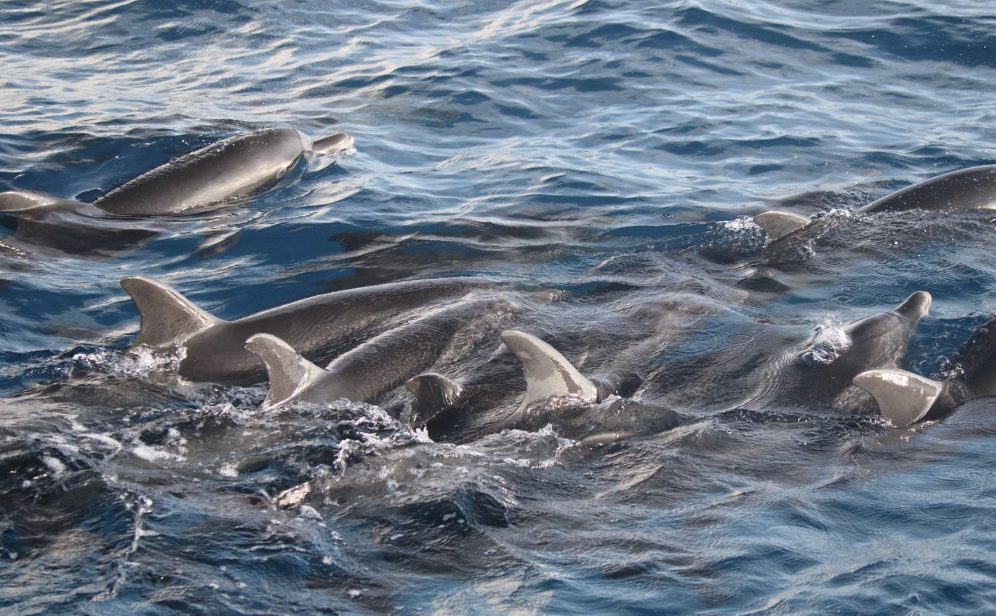
A super coalition of male Atlantic spotted dolphins chuff near the boat. (Photo credits: Allison Sanchez)
Into the Deep After Dark
Rather than leaving the area, we stayed with the dolphins as the sun began to set. Atlantic spotted dolphins travel off the edge of the shelf to forage at night, so we observed them swim into nearly 900 feet of water. Once darkness fell, the engines were cut and we watched as squid and other prey came up toward the surface. Swimmers entered the water to observe while dolphins occasionally glided through the area. One of the highlights was watching a mother and calf swim past beneath the vessel. Then, without a warning, a dolphin shot up from the darkness below and breached completely out of the water, landing just behind the swimmers. It was one of those unforgettable moments that reminds us how little of the dolphins’ world we actually get to witness, and how rewarding it is when they choose to share it with us.
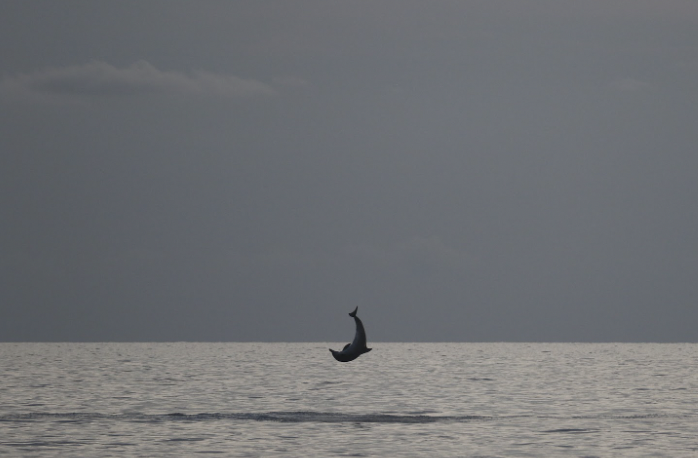
Aerial display shortly before nightfall.
Another favorite moment from the trip came during an encounter with Baelish, a fused male Atlantic spotted dolphin. He rolled over to expose his spotted belly while playing with a piece of sargassum. Playful object interactions often make for some of our favorite observations.
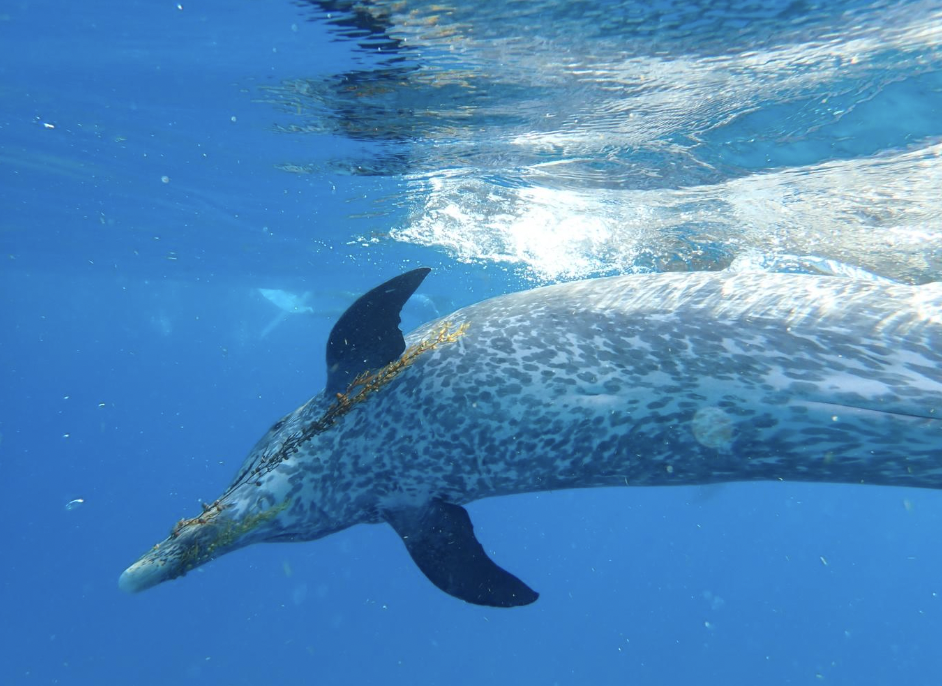
Baelish rolls to expose his belly while playing with a piece of sargassum. (Photo credits: Juliana Anderson)
Practicing the Science Behind the Scenes
Of course, field work isn’t just about observing dolphins. Interns also practiced one of the most important research techniques we use: fecal sample collection. During a training exercise, research assistant Allison played the role of a dolphin by diving beneath the surface and releasing “fecal matter” (crushed saltine crackers). Interns had to photograph the “dolphin”, collect the sample before it dispersed, and photograph the sample cup so it could later be matched to the correct “individual”. While the exercise was fun, the science behind it is incredibly important. Fecal samples provide researchers with genetic and hormonal information that can help identify maternity and paternity relationships and answer questions about the biology of individual dolphins. Practicing these techniques ensures the team is ready when real sampling opportunities arise during encounters.
Every expedition contributes valuable long-term data, but it also creates experiences that stay with us long after returning to shore. From witnessing a super coalition in the middle of courtship and ending the day with an unforgettable night drift, to practicing research techniques, this trip was a reminder that every day in the field has the potential to reveal something extraordinary.
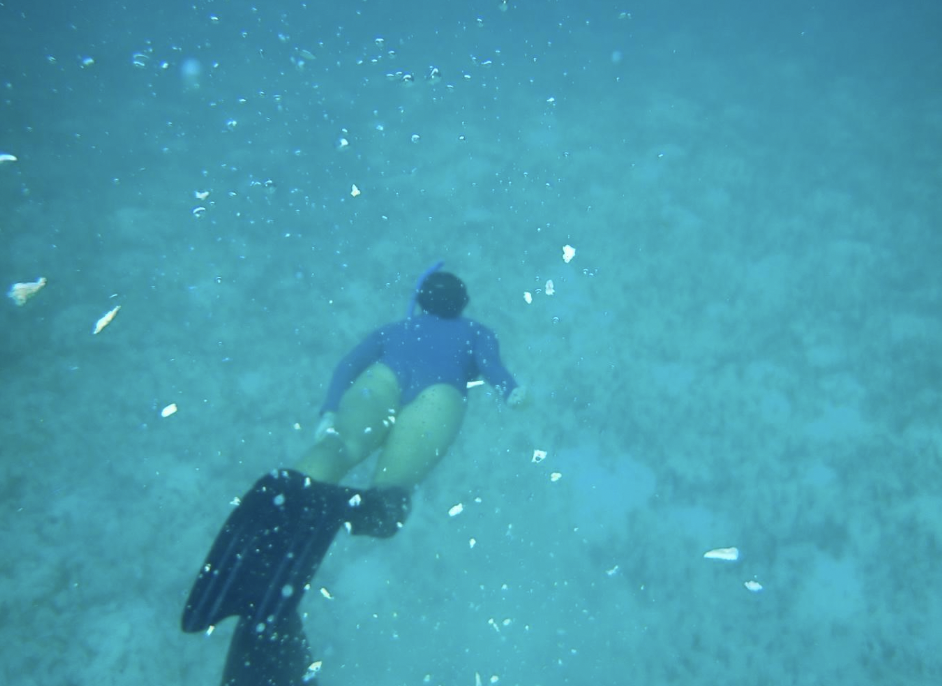
Research Assistant Allison conducts fecal collection training.