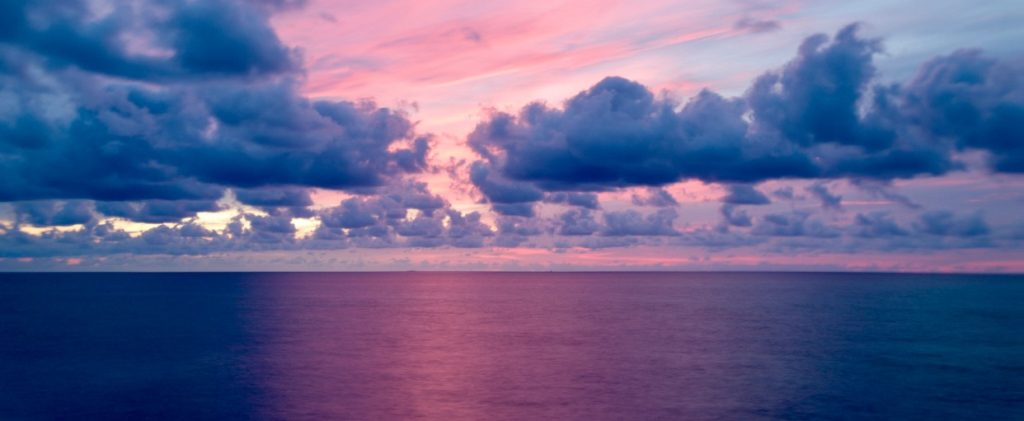
What does a typical day look like aboard a Wild Dolphin Project research vessel? The short answer: every day is different.
Some days are packed with dolphin encounters from sunrise to sunset. Other days, despite hours of searching, the dolphins remain elusive. That’s the nature of field research—you never know what the ocean has in store.
Still, most days begin the same way.
Morning on Anchor
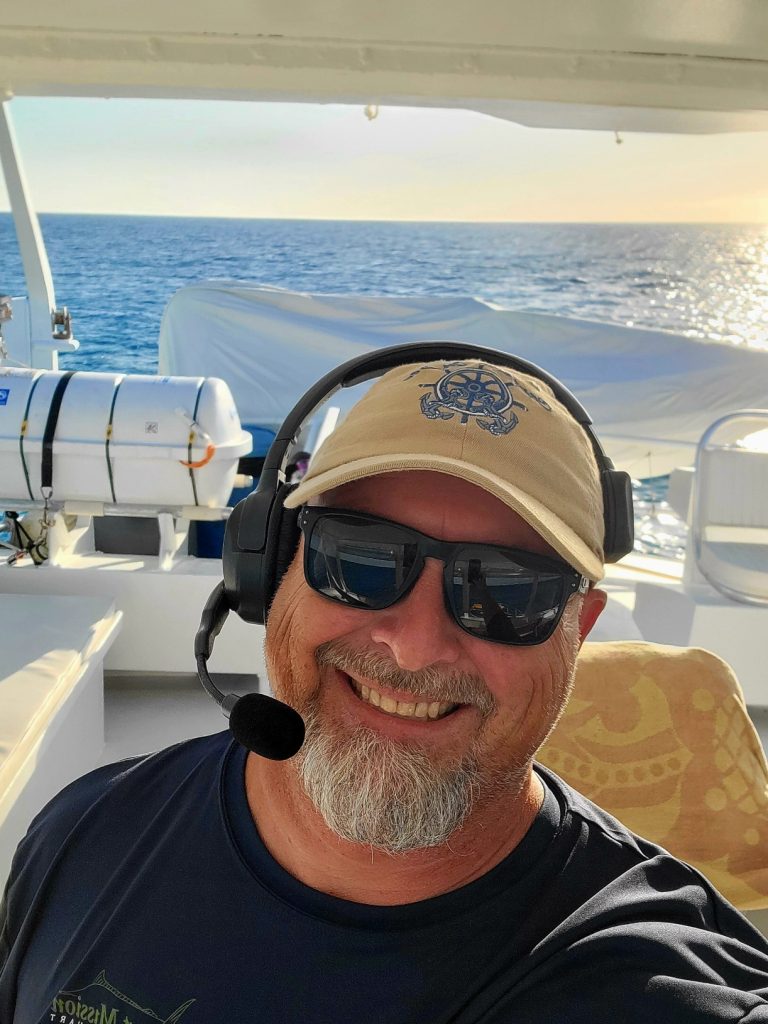
Captain getting ready for the day!
The sun rises over the clear waters of the Bahamas as our boat gently rocks at anchor. Before most people are fully awake, the captain is already checking engines and preparing the vessel for another day at sea.
Meanwhile, the smell of breakfast drifts from the galley as the cook gets to work feeding a hungry crew. With a full day ahead, everyone fuels up before getting ready for the day. Sunblock is applied generously. Bathing suits, rash guards, cameras, masks, and fins are readied. Some participants start the morning with a swim around the boat, while others enjoy yoga on deck or a quiet cup of coffee while taking in the view.
At first light, the dolphin watch begins, by our research director Dr. Denise Herzing or another trip leader. Someone is always scanning the horizon for signs of dolphins—looking for fins, splashes, birds, or any clue that might lead us to an encounter.
Time to Survey
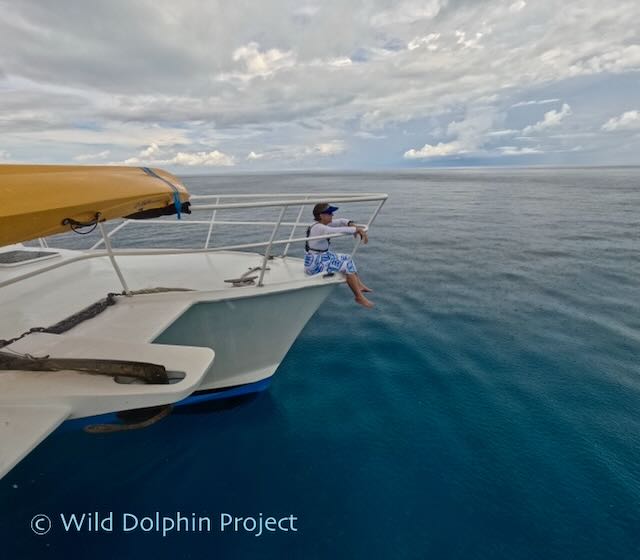
Around 9 a.m., the anchor comes up and the day’s survey officially begins.
The boat slowly cruises through the dolphin grounds, covering miles of ocean in search of Atlantic spotted dolphins and bottlenose dolphins. Every hour, a new person rotates onto dolphin watch from the bridge, helping scan the water for fins.
While the boat searches, life onboard settles into a rhythm. Researchers may be entering data at the workbench, reviewing previous encounters, or preparing equipment. Others might be reading in their bunks, chatting in the salon, or simply enjoying the ride.
Some days the seas are calm and glassy. Other days, rough conditions can make for a long day of searching. If weather and sea conditions cooperate, we might even take a short snorkel break at a nearby reef or shipwreck before resuming our survey. Then it’s back to searching.
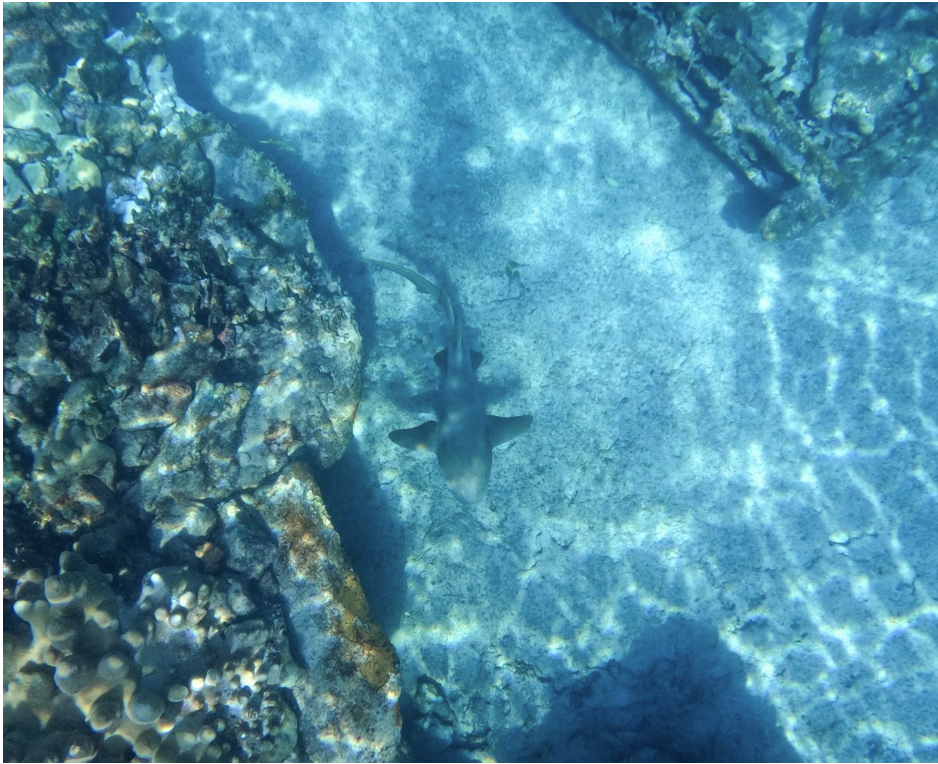
Snorkel break on the Sugar Wreck.
Waiting for Dolphins
Field research requires patience. Hours can pass without a sighting. Lunch is served, conversations come and go, and everyone continues watching the horizon. Then suddenly, everything changes.
A burst of stomping from the bridge. “Dolphins!”
Within seconds, people emerge from every corner of the boat and rush to the bow. The first question: Are they bottlenose dolphins or Atlantic spotted dolphins? The answer determines what happens next.
If They’re Bottlenose Dolphins
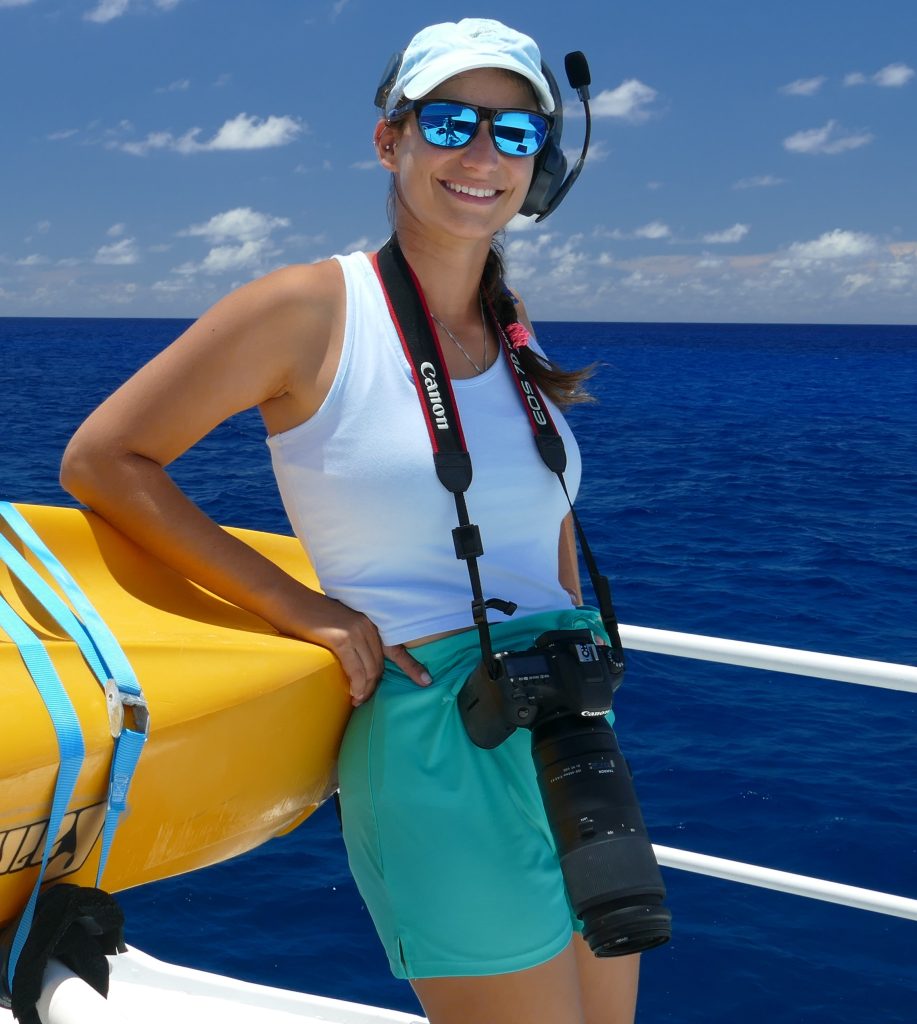
When we encounter bottlenose dolphins, the priority is often photo-identification. Researchers quickly grab cameras and begin photographing dorsal fins and other identifying features at the surface. Every image helps us track individuals we’ve known for decades and document new animals entering the population.
After the encounter, detailed records are logged, including environmental conditions, habitat, group composition, behaviors observed, photographs collected, and other important research data.
Then it’s back to searching.
If They’re Atlantic Spotted Dolphins
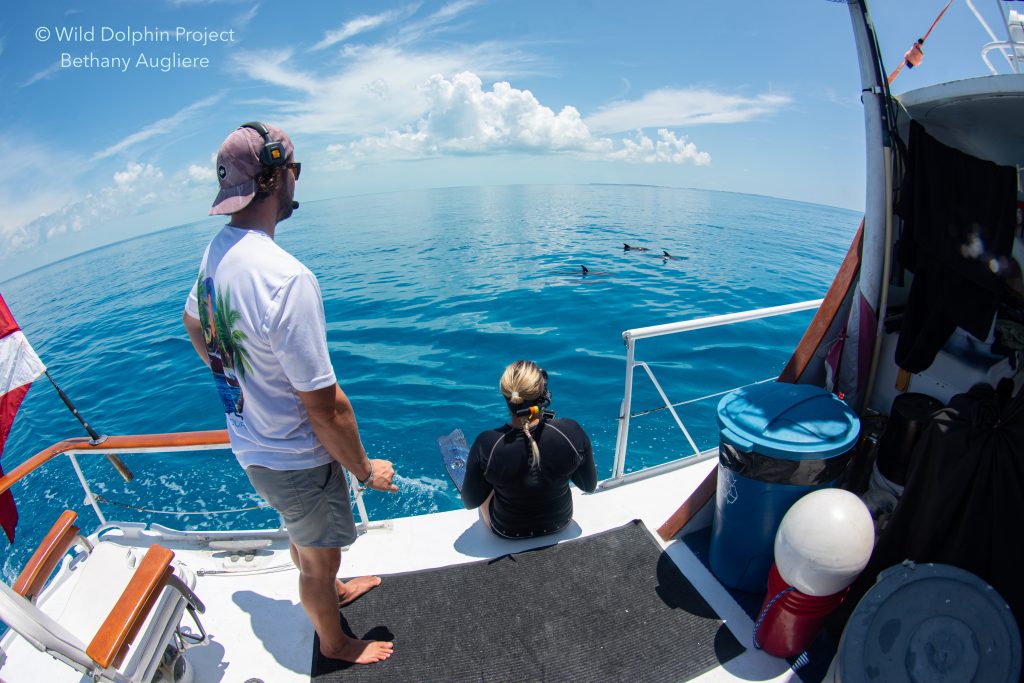
When Atlantic spotted dolphins are found, things get even more exciting.
Team A begins gearing up immediately. Masks, fins, snorkels, and underwater cameras come out as researchers prepare to enter the water.
One person remains on the bow to help track the dolphins and communicate with the captain, another on dolphin watch. Once the boat is carefully positioned, the team slips quietly into the ocean, with an all clear from the First Mate.
What happens next depends entirely on the dolphins.
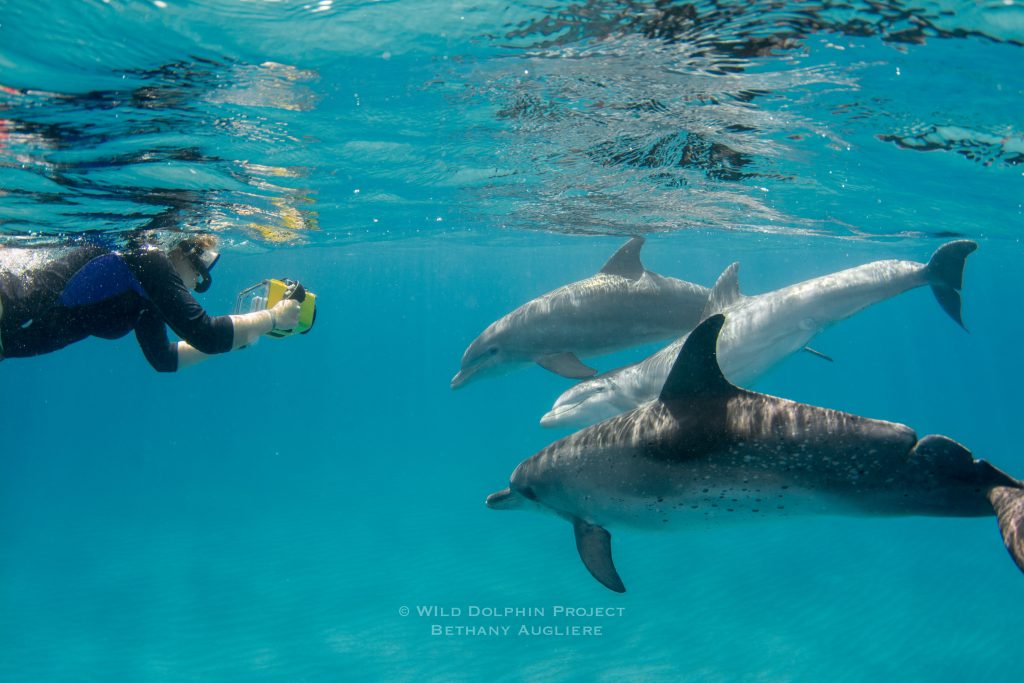
Sometimes they pass by quickly. Other times they linger, socialize, forage, play, or interact with one another while researchers observe and document their behavior underwater. Sometimes bottlenose show up, too. Long encounters may allow teams to rotate, giving more people an opportunity to enter the water and collect data.
When the encounter ends, everyone climbs back aboard, equipment is stowed, and researchers begin logging observations while the memories are still fresh.
Then the search resumes.
Wrapping Up the Day
We may find more dolphins. We may not.
Eventually, sometime around 6 or 7 p.m., the captain finds a suitable anchorage depending on weather and conditions and the boat settles in for the evening.
Dinner preparations begin, and everyone pitches in usually to help set the table, bring out the food etc… Feeding a crew of a dozen people is no small task, and setting the table often becomes a group effort. As the sun sets, everyone gathers on the back deck to share stories from the day, enjoy a meal together, and watch the colors fade across the water.
But the work isn’t over yet.
The Evening Shift
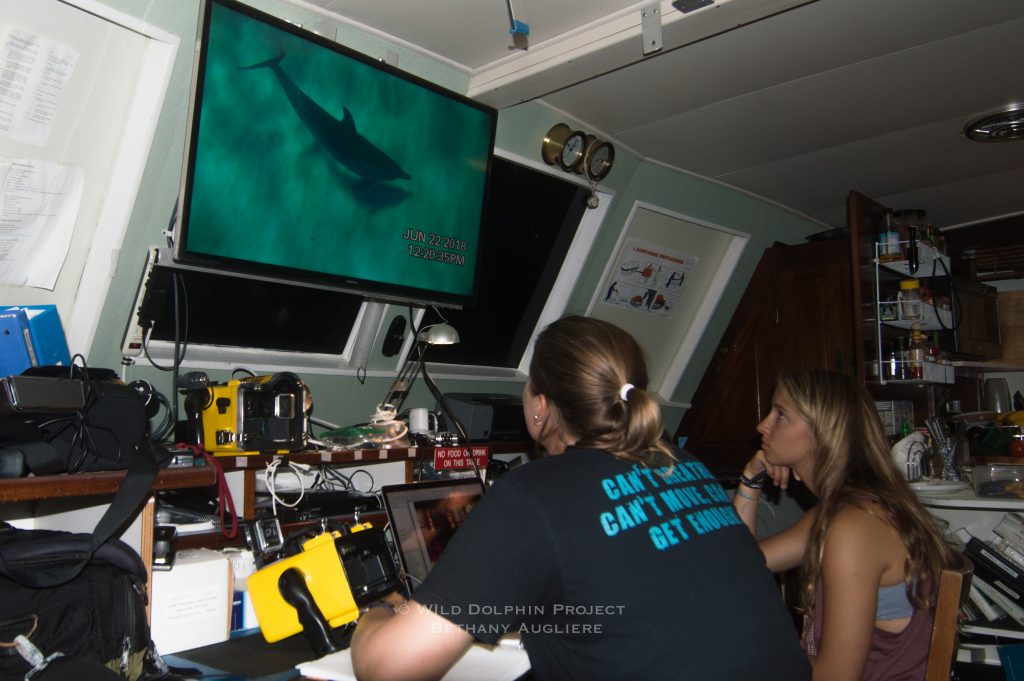
After dinner, with the entire group, researchers review video footage from the day’s encounters, interns and field assistants enter data, download photographs, and begin identifying individual dolphins. It’s also a chance for participants to ask more about the dolphins and behaviors.
Every encounter contributes another piece to a long-term dataset that has been building for decades.
After dinner, people shower, enjoy dessert, write in journals, or simply relax under a sky filled with stars.
Eventually, people drift off to bed, knowing the next day will begin early. Because tomorrow might bring dozens of dolphins—or none at all. That’s the beauty of life aboard a research vessel. Every day combines science, adventure, teamwork, and a healthy dose of unpredictability.