
Six Students Awarded Scholarships for Wild Dolphin Project Field Internship
Getting hands-on experience in marine science can be difficult, especially when fieldwork means traveling to another country and spending time at sea. The costs can put these opportunities out of reach for many students.
Established through a generous donation from longtime Wild Dolphin Project (WDP) supporter, Dr. Linda Castell, at the beginning of this year, the Stubby Memorial Scholarship Fund helps cover the cost of the internship for students who might not otherwise be able to participate.
The Wild Dolphin Project’s field internship gives students an opportunity to take part in a nine-day research expedition in the Bahamas, working alongside scientists studying wild Atlantic spotted and bottlenose dolphins. Interns are involved in daily research activities, including observing dolphins from the research vessel, assisting with underwater photography, identifying individual dolphins from photos and video, and documenting behavior. They also learn about dolphin biology, social structure, and communication while gaining hands-on experience in marine mammal research.
This past summer, six students became the first recipients of the scholarship. Choosing the six scholars wasn’t easy. The project received 124 applications from students in more than 10 countries before selecting Juliana, Charlotte, Olivia, Siân, Alejandra and Jada. The six chosen represent five countries: the United States, Wales, England, Colombia and The Bahamas.
“I genuinely don’t even know where to start when it comes to picking highlights from this trip… the whole experience was incredible,” says summer intern Charlotte. “The identification experience from this has helped me pay even more attention to all the tiny details of marine mammals and other organisms that can be utilized to identify them. I can now say that I have a level of confidence in cetacean identification and photography, which is really cool and something that I would love to keep doing in the future.”
Interns spend time on the water with the research team, collecting data, practicing field techniques such as fecal sample collection and learning how researchers document individual dolphins and their behavior.
“The internship confirmed that I want to pursue a career in cetacean behavioural research and strengthened my decision to undertake a master’s degree in marine mammal science,” said Siân. “I particularly enjoyed discussing scientific papers, interpreting observations and learning from such knowledgeable researchers. When I applied, I wanted to discover whether working as part of a cetacean research project was the path for me. I left knowing that it is.”
The Wild Dolphin Project has spent more than 40 years studying Atlantic spotted dolphins in the Bahamas. Its long-term research follows individual dolphins and their families across generations, giving researchers a rare look at dolphin behavior, social relationships and communication.
“I had the opportunity to learn different underwater methods and gain hands-on experience with photography, instruments, and data collection, while developing a deeper understanding of dolphin behaviors, social structures, and individuals,” says summer intern Alejandra. “Most importantly, I learned how we, as external observers, need to act and behave properly around the animals. Again, we are in their world; they are our teachers.”
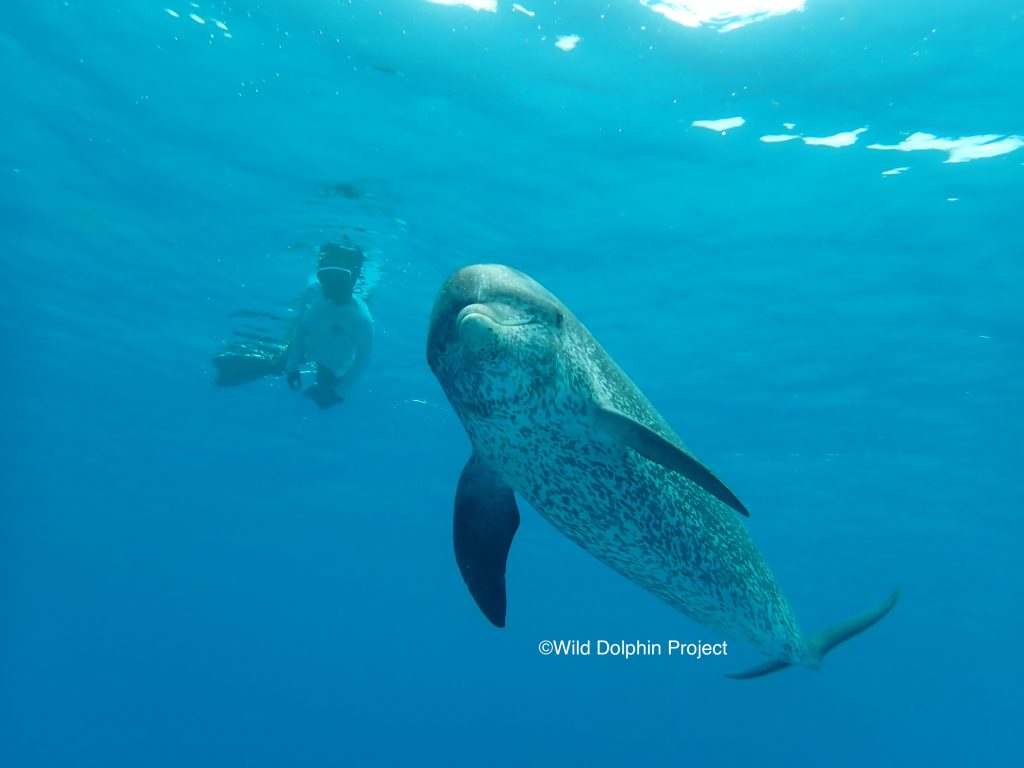
Summer intern Jada observing an Atlantic spotted dolphin underwater and practicing data collection skills.
The Wild Dolphin Project hopes to offer more scholarships in the coming years. Donations to the Stubby Memorial Scholarship Fund will help make that possible and give more students the chance to take part in the research.
Interested in helping the next group of aspiring marine scientists get out on the water? Learn more about the internship program and support the scholarship fund here.
Wild Dolphin Project Internship Program
Stubby Memorial Scholarship Fund
Thank you to Dr. Linda Castell for her generosity and decades of support for the Wild Dolphin Project. We are incredibly grateful for her commitment to our work and for helping make these opportunities possible for the next generation of marine scientists
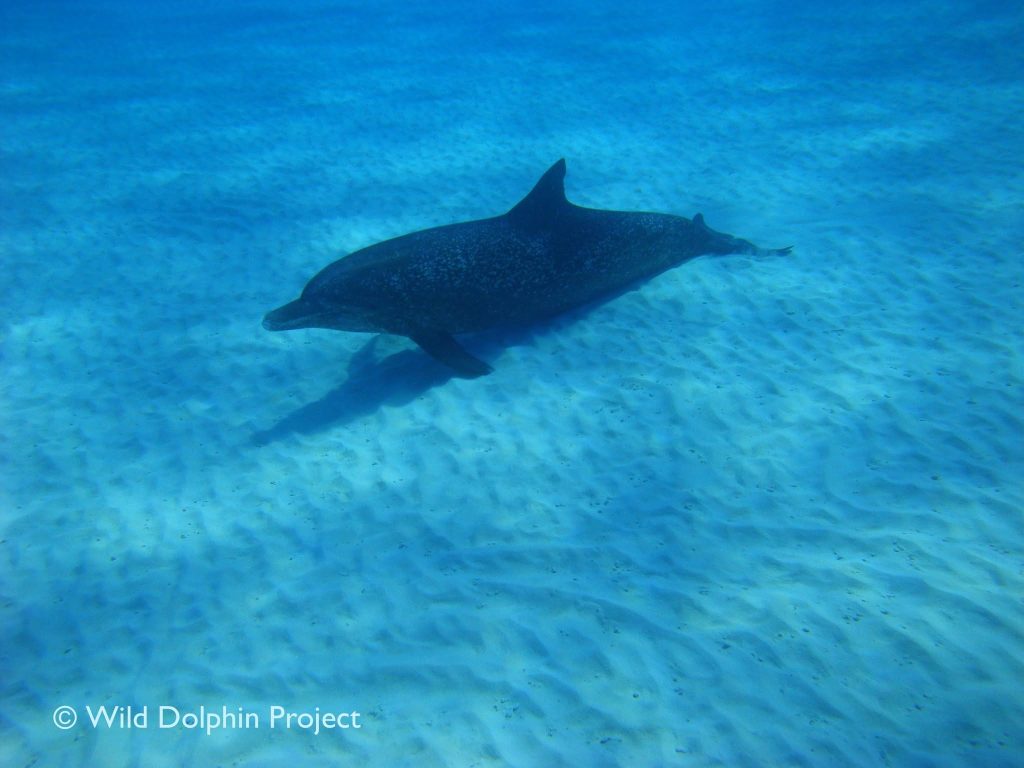
From the Archives, 2003: Stubby, one the oldest males in our population for many years.