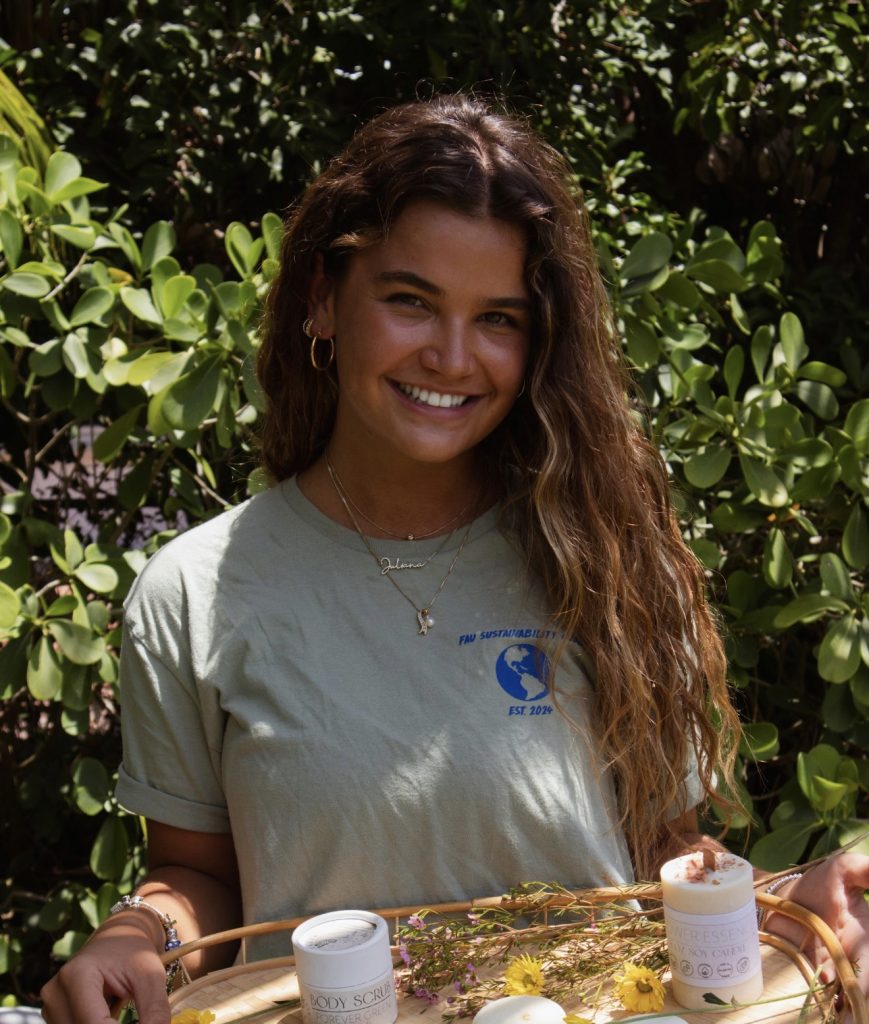
WDP Fall Intern Juliana Anderson.
Meet Our Intern: A Q&A with Our Fall Research Intern
Every season, we’re fortunate to welcome passionate students who bring curiosity, dedication, and fresh perspectives to the Wild Dolphin Project. This fall, we’re excited to spotlight one of our interns who is not only deeply committed to marine animal welfare.
She is currently completing a Bachelor of Science in Biological Sciences with a specialization in Marine Biology and a Bachelor of Arts in Chemistry at Florida Atlantic University. Based in Boca Raton, she’s on track to graduate in December 2026.
From digitizing decades of dolphin behavior data to editing underwater footage and diving deep into scientific papers, she’s embraced every task with enthusiasm.
Get to know her journey, her favorite experiences, and what inspires her work with us in this behind-the-scenes Q&A.
Where are you from, and what inspired your interest in the ocean and marine life?
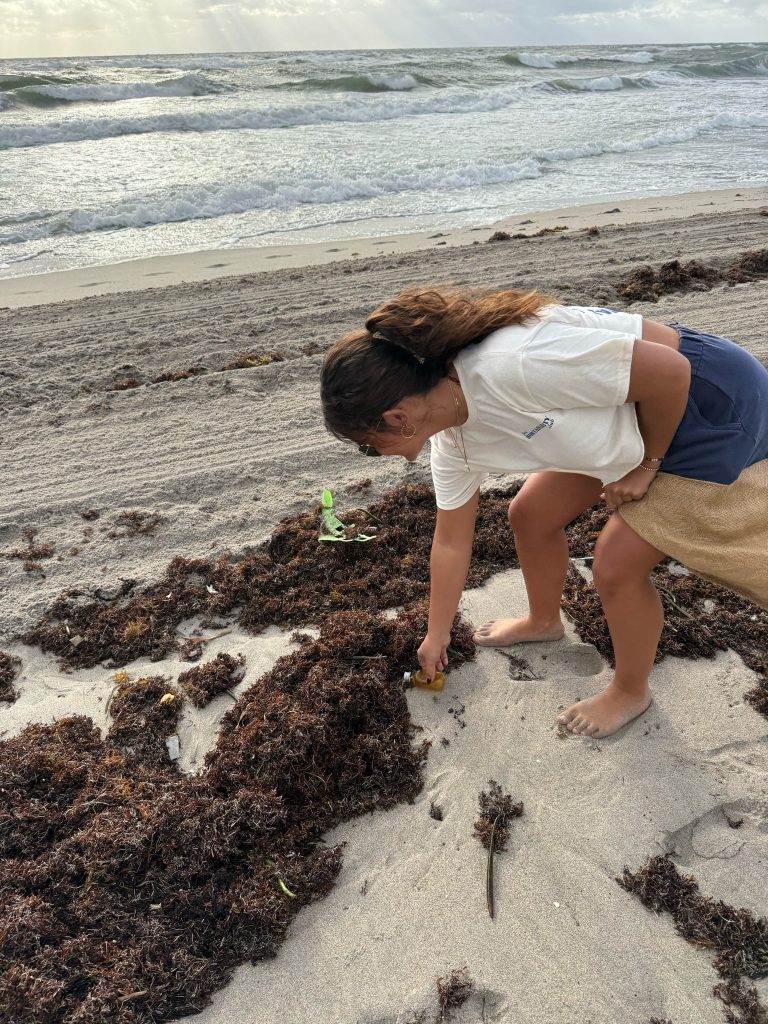
I am from Omaha, Nebraska, but I’ve been vacationing in Vero Beach, Florida my whole life. I moved to Florida for college because I love the ocean and want to make an impact on conservation and marine life. I am a dual major at FAU in Biology and Chemistry, graduating in December 2026, and I plan to attend veterinary school afterward. My dream is to become a marine animal veterinarian. I’m also vice president of the FAU Sustainability Club, and in my free time I’m usually at the beach—or surfing when the waves are good!
What led you to pursue marine biology and veterinary medicine?
Since childhood, I dreamed of moving to Florida and becoming a marine biologist. By high school, I realized I wanted to take that passion further and go into veterinary medicine. Although I didn’t initially plan to enter research, my internship at the Florida Oceanographic Society gave me the chance to conduct my own research project—an experience I really enjoyed.
How did you discover the Wild Dolphin Project?
I heard about the Wild Dolphin Project through FAU’s new ECOS scholarship program, which funds internships for science majors. That program helped me secure my summer internship at the Florida Oceanographic Society, and when I saw WDP listed as a fall option, I immediately applied. Being an intern at Wild Dolphin Project integrates my passion for marine animals and also the new experience I gained as a research intern.
What projects have you worked on during your internship?
My main project has been editing Insta360 footage from the 2024 and 2025 field seasons—sorting through underwater clips and highlighting dolphin interactions and behaviors. I’m now working on the GoPro footage as well.
I’ve also digitized decades of historical research records, including behavior logs, ID sheets, and encounter notes. Every couple of weeks, Alex (the current research assistant) assigns me a paper by Dr. Herzing, and we discuss the methods, strengths, and questions it raises. I helped inventory outreach materials and equipment, and I also cleaned and organized all cameras after field season.
What does a typical day look like?
Most days begin with reviewing footage and marking key moments to discuss with Alex. Once clips are approved, I edit them in Insta360 Studio. If I have an assigned paper, we meet to talk through it. Otherwise, I work on tasks like organizing, digitizing data, or taking inventory.
What has been your favorite experience so far?
Getting a tour of the Stenella on my first day—it’s the largest research boat I’ve ever seen! In the office, my favorite task is reading Dr. Herzing’s papers; I feel like I learn the most about dolphin behavior through those discussions.
What has been the biggest challenge?
What is something surprising you learned about dolphins?
Something that surprised me about dolphins is how family-oriented they are and how family lineages/specific groups stretch all the way back to when the research started. It is quite impressive and also inspiring that Dr. Herzing has been able to keep up with the same pods of dolphins for many years. It has been really interesting to read about their behaviors but also watch them on the field season footage. Having that visual reinforces what I read about in Dr. Herzing’s papers and also helps me understand the data I organize.
How has this internship influenced your academic and career goals?
This internship strengthened my understanding of marine mammal communication. I learned how long-term data supports animal health and welfare. I gained experience handling real-world research data, valuable for evidence-based veterinary care. It reinforced my passion for working with aquatic species in both research and medical settings. I want to express my gratitude to Dr. Herzing and Alex for allowing me to work under them. Dr. Herzing’s dedication to the field is inspiring and Alex has been a wonderful mentor.
What’s next for you?
After this internship, I plan to continue gaining animal-care and clinical experience and apply to veterinary school this summer.
What advice do you have for future interns?
Show up every day with passion and dedication—it will take you far. Say yes to opportunities, especially ones that feel a little scary or unexpected. Those experiences often teach you the most and introduce you to the mentors who shape your future.
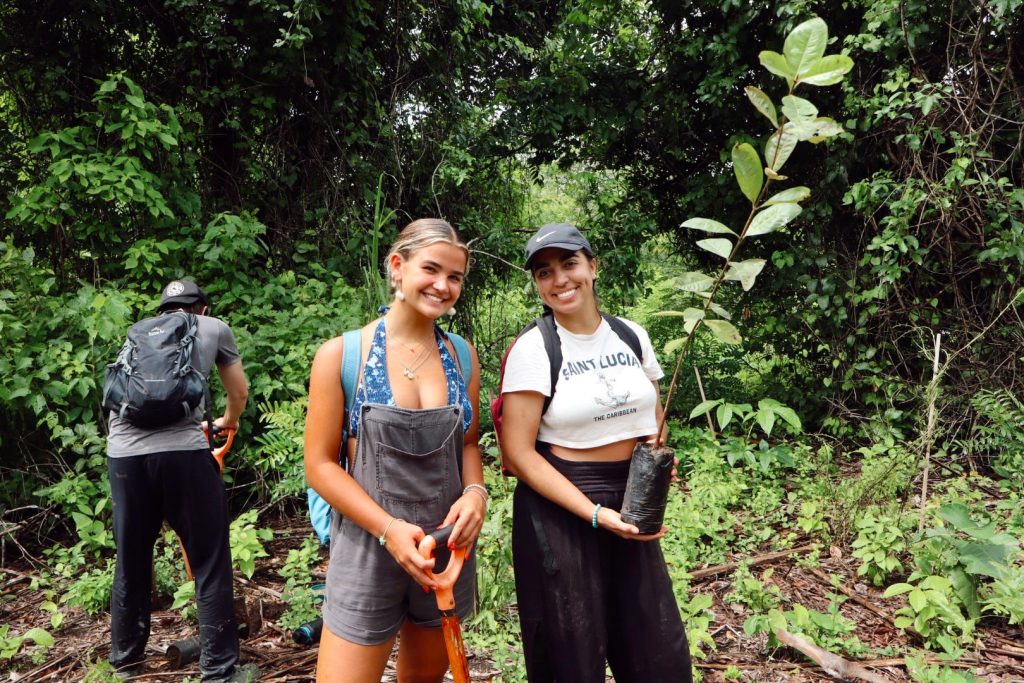
Juliana planting trees at Ostional National Wildlife Refuge Sea Turtle Conservation and Research Program.