
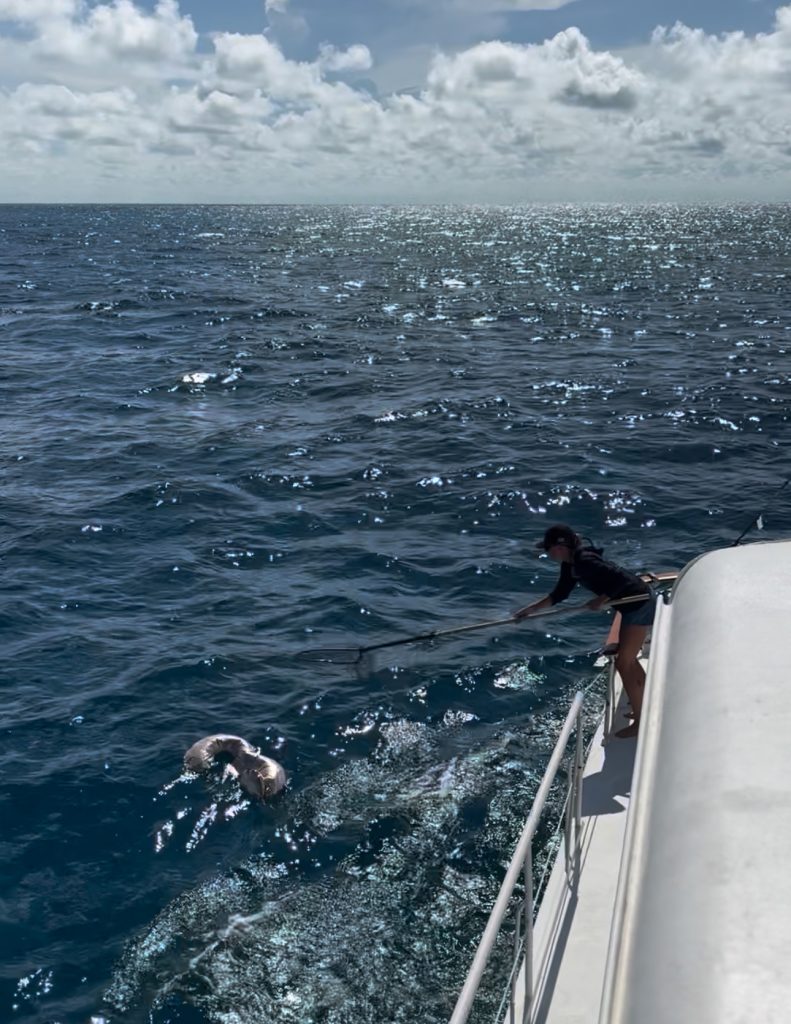
Our first mate picking up balloons in the middle of the ocean.
The holiday season arrives with all the familiar sparkle—twinkling lights, gatherings with loved ones, and a flurry of gift-giving. But behind the cheer sits a growing concern: the surge of waste that accompanies this time of year. In the United States alone, household waste increases by nearly 25% between Thanksgiving and New Year’s. Much of that extra trash—plastic packaging, disposable décor, ribbons, shipping materials—eventually makes its way into our waterways. For the ocean, the season of joy can quickly become a season of stress.
1. Rethink Gift Giving: Choose Experiences, Not Excess
The ocean teaches us that everything is connected—currents link distant islands, coral reefs rely on microscopic algae, and every piece of plastic discarded on land has the potential to reach the sea. Gifts are no different.
Instead of buying products destined for landfills, consider giving experiences: a family hike, a paddleboard rental, a wildlife tour with a local naturalist, or a membership to a nonprofit (like WDP!). These gifts deepen connection without generating plastic. If tangible items are important, choose sustainably made, long-lasting products—preferably from small businesses or ocean-friendly brands committed to reduced packaging.
Remember: the wrapping matters as much as what’s inside. Skip the glittery paper (it can’t be recycled) and choose kraft paper, newspaper, or reusable fabric wraps.
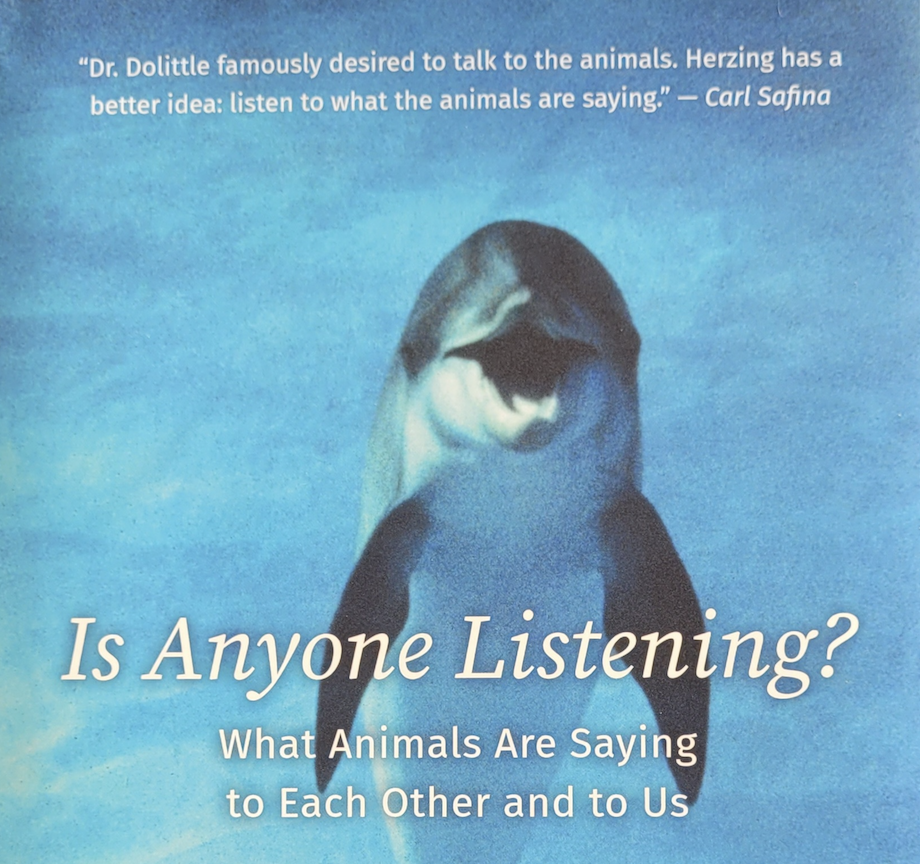
Dr. Denise Herzing’s latest book makes a great gift! Buy it here.
2. Shop Local to Shrink Your Carbon Footprint
Every shipped package has its own carbon wake—transport emissions, plastic cushioning, and layers of packaging. When we support local businesses, we reduce fuel use, waste, and the distance between the producer and the consumer.
Visit holiday markets, coastal craft fairs, or small shops near your community. You might find handmade soaps, ceramics, art, or edible gifts that don’t rely on the mountains of plastic typically associated with online shopping.
3. Make Your Holiday Table Ocean-Friendly
Food waste is one of the biggest contributors to holiday trash. Planning intentionally is a simple but powerful place to start: create realistic meal portions, freeze leftovers, and encourage potlucks that reduce the burden—and the waste—on any one household.
When selecting ingredients, consider sustainable seafood if it will be part of your meal. Look for the blue MSC label or consult the Monterey Bay Aquarium’s Seafood Watch recommendations. Supporting well-managed fisheries helps protect the marine ecosystems at the center of our celebrations.
Avoid single-use plastic dinnerware. Bring out the real plates, cloth napkins, and metal silverware—even for large groups. Yes, it means more washing, but it also means far less waste heading to landfills and waterways.
4. Decorate with Nature, Not Plastic
So much holiday décor—tinsel, balloons, synthetic garlands—ends up as microplastic pollution. Instead, draw inspiration from the natural world. Use pine branches, leaves, seashells found responsibly (never take live shells), driftwood, or citrus slices dried on a low oven rack. Not only are these decorations biodegradable, but they also root your decorations in the beauty of the season.
If you prefer string lights, choose LED versions that last longer and use less energy.