Our annual Wild Ocean Science evening felt like a reunion of people who share a deep, enduring connection to the ocean. From the moment guests arrived, there was a strong sense of energy in the room—scientists, longtime supporters, ocean advocates, and curious newcomers all gathering with a shared purpose: to celebrate ocean science and to hear firsthand about the work of our guest, Dr. Shane Gero, a sperm whale expert and Founder of the Dominica Sperm Whale Project.
Gero is Biology Lead for Project CETI (Cetacean Translation Initiative), Scientist-In-Residence at Canada’s Carleton University, and a National Geographic Explorer. A marine biologist who has spent over two decades studying the same families of sperm whales off the coast of Dominica, Dr. Gero is at the heart of one of the most ambitious scientific efforts of our time: using artificial intelligence to listen to whales—and begin to understand what they’re saying.
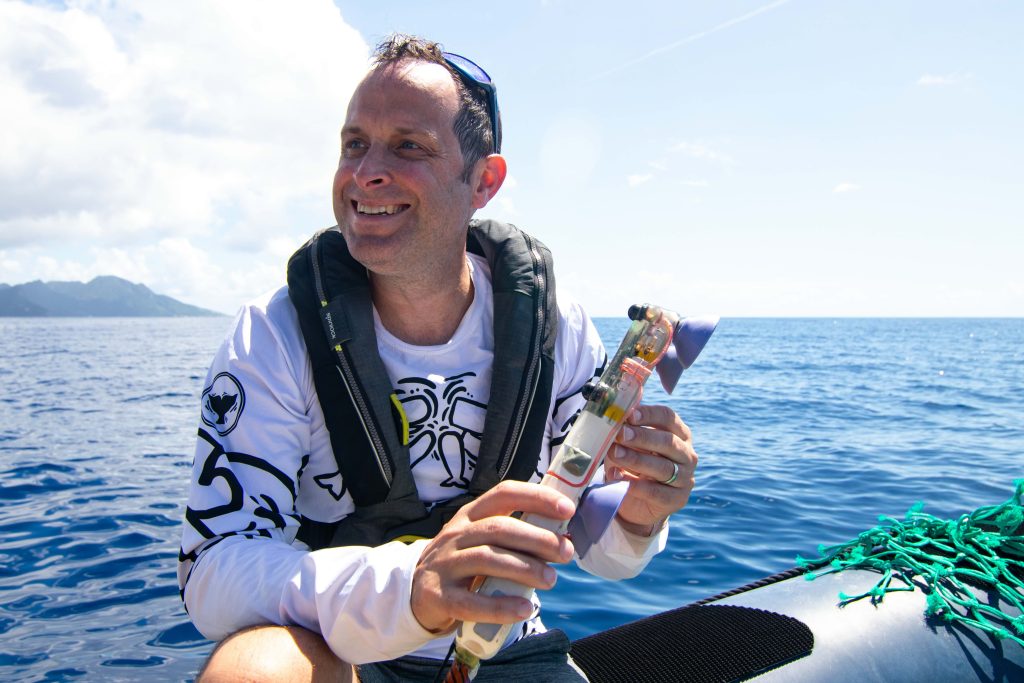
Dr. Shane Gero in the field.
The night began during cocktail hour, where guests reconnected over food and drinks while browsing and bidding on generously donated raffle items from supporting organizations like Focused on Nature, founded by Prince Hussain Aga Khan—a dedicated supporter of Wild Dolphin Project—along with contributions from WDP board member Ruth Petzold, 4ocean, and others.
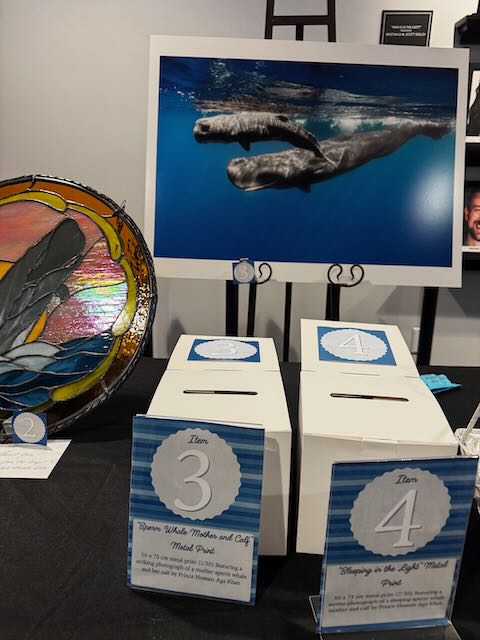
Raffle Items at WOS
The room buzzed with conversation as guests caught up with familiar faces, met new ones, and swapped stories about past field seasons, research milestones, and personal moments spent on or under the water. Dr. Denise Herzing, founder and research director of WDP, was also available for book signings. There’s something uniquely special about the Wild Dolphin Project community; it’s not just about the science, but about the relationships built over years of collaboration and shared passion for the ocean.
The highlight of the evening was, of course, the keynote presentation by Dr. Gero. Known for his extensive work studying sperm whales, Gero brought both expertise and a storyteller’s sensibility to the stage. What stood out right away was how personable he was—his talk wasn’t just about data or findings, but about experiences, encounters, and the relationships he’s built with the animals he studies, like Fingers, an adult female, and the “Group of 7”.
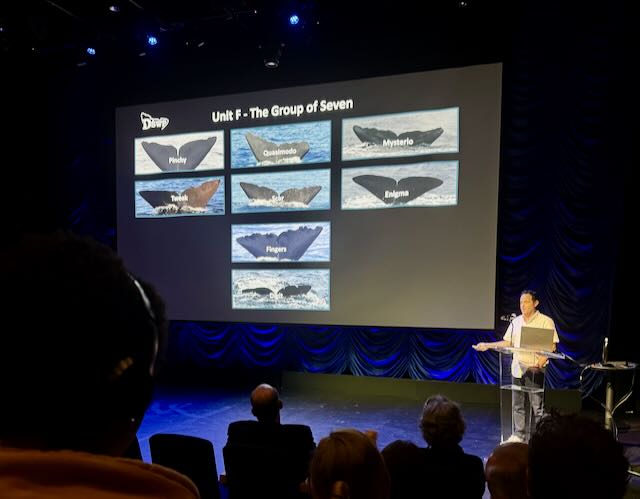
Dr. Shane Gero during his talk at Wild Ocean Science.
Then our host Miles O’Brien sat down with Shane Gero, Denise Herzing, and Thad Starner—a collaborator with Dr. Herzing on the CHAT work and professor at the Georgia Institute of Technology’s School of Interactive Computing—to explore the evolving intersection of marine mammal communication, artificial intelligence, and the future of understanding nonhuman intelligence.
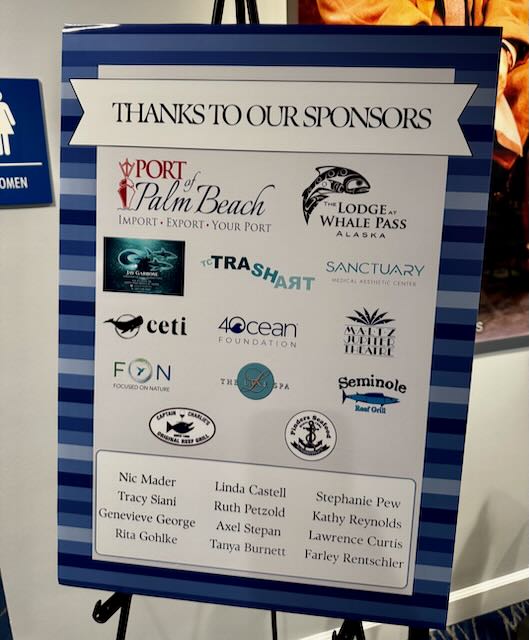
It was a fantastic evening, bringing together more than 100 attendees, with 10 complimentary tickets provided to Palm Beach State College students thanks to generous sponsorships, and the support of 15 sponsors (not including in-kind contributors). We’re deeply grateful to all of our sponsors and volunteers who made the event possible, as well as to everyone who came out to support this work.

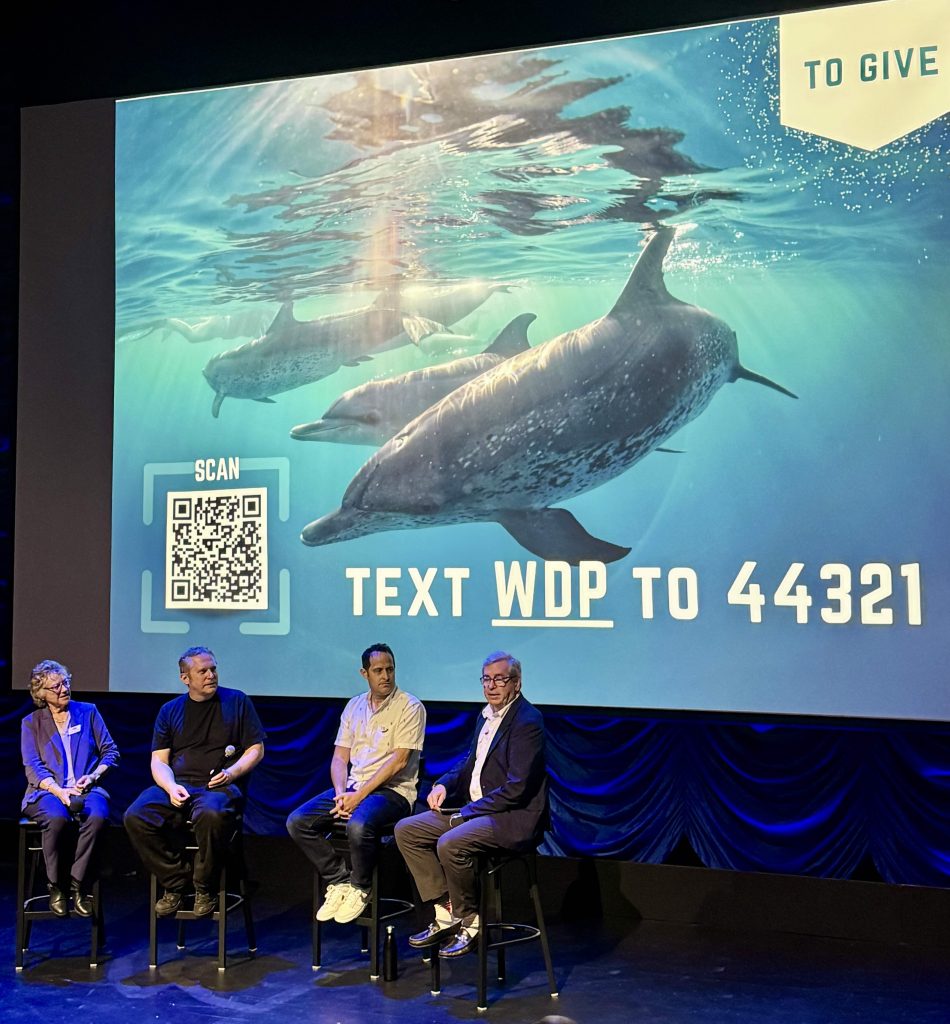
From Left: Dr. Herzing Herzing, Dr. Thad Starner, Dr. Shane Gero, Miles O’Brien